The Shackles of Liberty

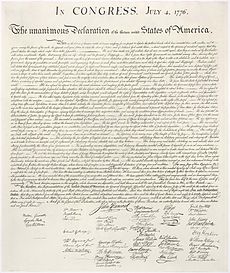
230px-Us_declaration_independencePat and I are excited! My full-length play The Shackles of Liberty has won this year’s Southern Playwrights Competition. The Jacksonville State University Department of Drama will present it as part of its 2016-2017 season. It’s a wonderful honor.

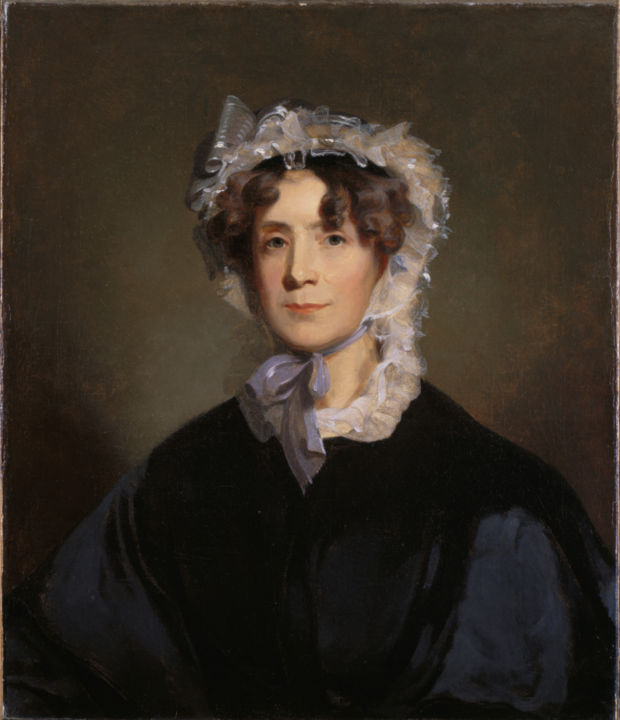
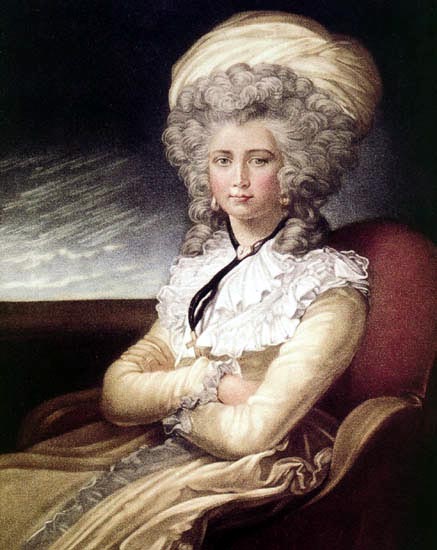
The Shackles of Liberty is a fictionalized account of Thomas Jefferson’s last day in Paris in 1789. It focuses on his relationships with three women—his European lover Maria Cosway, his older daughter Martha (“Patsy”), and his young slave mistress Sally Hemings.

I hope I’ve written a play about today and the America we live in. A century and a half after slavery ended, we still need to be reminded that “Black Lives Matter.” A little less than a hundred years after women gained the right to vote, the fight for gender equality is far from over. And not to sound pessimistic, but it seems to me parents and children will always be at odds about one thing or another.

These are a few of the issues I’ve tried to explore in The Shackles of Liberty. I am grateful to Jacksonville State University for the opportunity to bring this play to life in the theater!

THAT Soliloquy — Is It About Suicide?

“To be, or not to be—that is the question …”

… but what is the question, really? What is Hamlet actually talking about? I was pretty slow as a teenager, so when I asked a high school English teacher this question, of course he told me, as teachers always do …

Hamlet is contemplating suicide.”

The trouble was, I couldn’t quite make sense of it. Yes, I understood what all the words meant—that “quietus” was a settlement of a debt, a “bare bodkin” was a dagger, “fardels” were burdens or loads, the “undiscover’d country” was death, and all the rest of it.

First Folio, 1623

First Folio, 1623

But wasn’t taking “arms against a sea of troubles” a rather odd way of describing suicide? And what about those “enterprises of great pitch and moment” that “lose the name of action” that Hamlet talks about at the end? Surely, I suggested, Hamlet wasn’t talking about suicide there.

I succeeded only in convincing my English teacher that I was a great deal dumber than he already knew me to be. And who was I to argue? I let the matter rest for a long time.

It wasn’t until many years later that I discovered the 1982 Arden edition of Hamlet, edited by the late Shakespeare scholar Harold Jenkins. Thirty years in the making, it was so exhaustively (and exhaustingly) annotated that Jenkins couldn’t fit all of his annotations on the pages of the text itself; he added another 150 pages of notes at the end. It was a dream for a Shakespeare geek like me. I devoured every word.

And when I got to that all-too-famous soliloquy of Act III, scene i, I was in for a special treat. The speech was annotated first with about a page and a half of footnotes, then with another eight and a half pages of endnotes—a total of around 10 pages of annotation altogether.

To my delight, I found that Jenkins devoted most of those notes to proving my high school teacher (and just about everybody else) wrong …

It is impossible … to say that Hamlet ever contemplates suicide for himself or regards it as a likely choice for any man.

For one thing, this is the only soliloquy of Hamlet’s (out of seven in all) that never once uses first person singular pronouns like “I” and “me.” Nor does he mention his father’s murder, his uncle’s usurpation, his mother’s remarriage, or anything else having to do with the story of the play. Hamlet isn’t talking about his own specific situation at all, but about what life is like for all of us.

And his “question,” as Jenkins sums it up, is simply, “Is life worth living?” Hamlet goes on to give us a lot of reasons why life might not be …

… the whips and scorns of time,
Th’oppressor’s wrong, the proud man’s contumely,
The pangs of dispriz’d love, the law’s delay,
The insolence of office, and the spurns
That patient merit of th’unworthy takes …

And of course, right then Hamlet does mention the possibility of suicide—after all, one could always do oneself in with a “bare bodkin.” But according to Jenkins,

this is a rhetorical question, which already presupposes its answer, a hypothetical question brought in only to be dismissed.

It’s the same with just about any positive action we might take. We don’t wind up doing much of anything about life’s “sea of troubles.”

And according to Jenkins, that “sea” is a richer image than we may have realized:

Edwin Both as Hamlet, ca. 1870

Edwin Booth as Hamlet, ca. 1870

The metaphor appears to be based upon well-known instances, notably that of the Celts, who, as described by various ancient authors, rather than show fear by flight, would draw their swords and throw themselves into the tides as though to terrify them.

A desperate and futile gesture, certainly. You could even call it suicidal, since it’s surely not going to end well. But suicide isn’t really the point. It’s about doing something—anything—against the manifold torments of existence. It’s also about accepting the fact that you’re doomed to lose—or at the very least to die in the attempt. Hamlet learns this bitter truth himself at the end of the play.

Most of us don’t dare undertake any such endeavor, in no small part due to our fear of the “undiscover’d country” of death …

Thus conscience does make cowards of us all,
And thus the native hue of resolution
Is sicklied o’er with the pale cast of thought,
And enterprises of great pitch and moment
With this regard their currents turn awry
And lose the name of action.

As Jenkins puts it,

we come to the end of life’s “troubles” not when we put an end to them but when they put an end to us.

Intimations of Immortality

I find myself reflecting on mortality these days—wondering as we all do whether the elusive entity that we call “self” survives the death of the body. One of the most tantalizing suggestions I’ve heard comes from psychologist and neuroscientist Stephen Kosslyn. Back in 2005, he was asked this question:

“What do you believe is true even though you cannot prove it?”

His answer really intrigued me:

Your mind may arise not simply from your own brain, but in part from the brains of other people.

Sobo_1909_624Kosslyn’s explanation is simple and utterly non-mystical. To sum it up crudely, your mind is not entirely self-contained within your skull. In order to perform certain complicated mental tasks, you must extend the limits of your physical brain with “prosthetic systems”—for example, an electronic calculator to multiply 756 by 312, which is rather difficult to do in your head.

As it happens, people perform this very same function for one another. Human beings set up what Kosslyn calls “Social Prosthetic Systems” (SPSs) in which people share their brainpower to solve countless challenges. A marriage might be the most sophisticated SPS of all—a relationship in which two people are constantly (and quite literally) sharing brains. As Kosslyn puts it,

parts of other people’s brains come to serve as extensions of your own brain. And if the mind is “what the brain does,” then your mind in fact arises from the activity of not only your own brain, but those of your SPSs.

Kosslyn isn’t blind to the enormous implications of this idea:

In fact, one could even argue that when your body dies, part of your mind may survive.

Cognitive scientist Douglas Hofstadter has expressed much the same notion:

You can imagine a soul as being a detailed, elaborate pattern that exists very clearly in one brain. When a person dies, the original is no longer around. But there are other versions of it in other people’s brains. It’s a less detailed copy, it’s coarse-grained.

This concept of life after death might strike you as painfully prosaic. It’s certainly a far cry from Wordsworth’s belief in a soul that not only survives the death of the body, but has existed always:

Our birth is but a sleep and a forgetting:
The Soul that rises with us, our life’s Star,
Hath had elsewhere its setting,
And cometh from afar:
Not in entire forgetfulness,
And not in utter nakedness,
But trailing clouds of glory do we come
From God, who is our home …

I’m open to such sentiments, which harmonize well with mainstream religious and mystical beliefs. But the simplicity and earthiness of Kosslyn’s idea holds a certain beauty for me. And I don’t seem to be alone in feeling this way.

After Hofstadter’s wife, Carol, died in 1993 at the age of 42, he experienced an epiphany while looking at her picture one day. In his book I Am A Strange Loop, Hofstadter describes how he was overcome with the realization that Carol’s soul and his own had fused “into one higher-level entity” shaped out of shared hopes and dreams for their children. Their hopes

were not separate or distinct hopes but were just one hope, one clear thing that defined us both, that wielded us into a unit, the kind of unit I had but dimly imagined before being married and having children. I realized that though Carol had died, that core piece of her had not died at all, but that it had lived on very determinedly in my brain.

That sounds to me like a kind of immortality well worth hoping for.

Gaia and the Octopus

Mimic Octopus by Steve Childs from Wikimedia Commons

Mimic Octopus by Steve Childs
from Wikimedia Commons

“Gaia is a tough bitch.”

So observed the late biologist Lynn Margulis, who formulated the Gaia hypothesis in collaboration with James Lovelock. Margulis was warning us not to sentimentalize Gaia as “an Earth goddess for a cuddly, furry human environment …” Despite humanity’s perverse determination to destroy biodiversity, Gaia will eventually bounce back—but “probably in a world devoid of people.”

But if human beings go the proverbial “way of the dodo,” which animal might take our place as the planet’s dominant species? Not that there has to be a dominant species, of course. After her dismal experience with us, Gaia might prefer to do without one altogether.

Even so, Pat’s and my money is on octopuses. We’ve been running into story after story about their vast dexterity, sensitivity, intelligence, and grace. With excellent eyesight, light-sensitive skin, and suckers equipped with ultra-keen taste receptors, octopuses undoubtedly enjoy a far more vivid sensory experience of the world than we clunky humans do.

Octopuses are also tool users that have been observed turning broken coconut shells into “mobile homes.” And they are infinitely resourceful, even capable of deliberate trickery. Once at the Monterey Bay Aquarium, the staff noticed that its live crabs were mysteriously disappearing at night. It turned out that a red octopus had secretly entered the facility by stowing away on the back of a sponge. The creature hid in a tank during the day, then by night sneaked out of water and across the aquarium floor to the crab tank, where it partook of tasty crab dinners.

Pat and I are most dazzled by the abilities of the mimic octopus, with its capacity to swiftly assume the shapes of algae-encrusted rocks, sea snakes, venomous sole, sea anemones, lionfish, flatfish, jellyfish, and an untold repertoire of other forms. Moreover, mimic octopus’s choice of shapes requires highly sophisticated decision-making. This video takes our breath away:

As Caspar Henderson puts it in an excerpt from his new book, The Book of Barely Imagined Beings: A 21st Century Bestiary, the octopus has

a mind that calculates and even, perhaps, possesses a form of awareness. In some ways, their abilities surpass ours.

Considering that the nearest common ancestor of humans and cephalopods disappeared some 540 million years ago, Pat and I can’t help but wonder—why isn’t the octopus now the world’s dominant species instead of Homo sapiens? Virtual reality pioneer and octopus-fancier Jaron Lanier has asked the same question:

[They] taunt us with clues about the potential future of our species…. [Their] raw brain power seems to have more potential than the mammalian brain…. By all rights, [they] should be running the show and we should be their pets.

The explanation is painfully simple, as Henderson explains,

The Common octopus typically lives less than a year and even the largest species only live three to five years …. As a consequence, they do not get a chance to pass on what they learn to the next generation. Cephalopods have no culture: no childhood in which they are guided by their parents. They must start from scratch in every new generation.

But this might not be the status quo forever. In less-explored ocean depths, cephalopods are now thought to live markedly longer than they do in more familiar waters. Recently, a deep-sea octopus was observed protecting her eggs for an astonishing 4.5 years. As science writer Megan Gannon puts it,

Not only is that four times longer than most shallow-water octopuses even live, it’s also the longest brooding period known of any animal on the planet, elephants and emperor penguins included ….

“In the deep sea, we have so much to discover,” commented zoologist Janet Voight.

Indeed, might some new type of culture already be burgeoning in uncharted depths? And if Gaia, tough bitch that she is, soon relegates the Homo sapiens nuisance to the ash heap of natural history, mightn’t she summon forth cephalopods to be the new Stewards of the Earth?

A Magic Circle


Why do we lowly humans experience aesthetic beauty? Life started evolving on our planet somewhere between 2.7 and 3.5 billion years ago. Something happened during that time that blessed us with the ineffable pleasures of music, visual art, poetry, and the wonders of nature. What could that something be?

It’s the sort of question that Pat and I ask each other as we pursue our unending fascination with Story. The other day, Pat ran across a bit of news that seems to offer a tantalizing morsel of an answer to that question.

Not along ago, underwater photographer Yoji Ookata spotted something amazing while diving near the Japanese island of Amami Ōshima. About 80 feet below sea level, a beautiful circular design was carved in the sandy seabed. The “magic circle” was about 6.5 feet across, exquisitely shaped from meticulously raised ridges, and decorated around the edges with tiny seashell fragments. What artist would have gone to the trouble of sculpting such a work there, where it was doomed to be washed away by ocean currents unseen by humans?

As it turned out, the creator of such patterns is the 5-inch-long male puffer fish. The design is intended to attract a mate. If a female puffer fish finds the circle sufficiently attractive, she lays her eggs in its center. The male fertilizes the eggs and buries them; the circle’s ridges will offer protection from ocean currents, and the sea shell fragments will supply vital nutrients. A BBC video narrated by Richard Attenborough shows this process from beginning to end.

The circle bears a stunning resemblance to the mandala, that ancient Hindu and Buddhist symbol of the universe. Countless human artists have been inspired by this sacred shape, including painter Linda Laino.

by Ma Le of San Francisco, from Wikimedia Commons

Amazing Sand Mandala by Ma Le of San Francisco, from Wikimedia Commons

Pat and I are especially struck by parallels to the modern Zen practice of making sand mandalas. A video made at Clark College shows a group of Tibetan monks creating such a mandala. This large and dazzling image is built with meditative patience, just a few multi-colored grains of sand at a time. The Zen mandala is ritually destroyed after its completion, much as the puffer fish’s “magic circle” is destroyed by the sea. All beauty, after all, is transient.

In his book The Diversity of Life, biologist E. O. Wilson writes about humankind’s aesthetic fascination with nature. He calls this fascination biophilia, which he defines as “the connections that human beings subconsciously seek with the rest of life.”

Looking at these newly discovered designs, it occurs to Pat and me that such subconscious connections predate the human species by eons. When we look into these undersea mandalas, we gaze deep into the evolutionary matrix of aesthetic beauty. The puffer fish’s circle brings us full circle. Our love of beauty is as one with our unceasing quest for life.

This post is dedicated to William S. E. Coleman.