Robert E. Lee’s Mexican “Noche Triste”

… one of the most unjust [wars] ever waged by a stronger against a weaker nation …

Ulysses S. Grant in 1843

Ulysses S. Grant in 1843

That was how Ulysses S. Grant described the Mexican-American War of 1846-48 in his Personal Memoirs. Some two decades before he commanded the Union Armies during the American Civil War, Grant served in Mexico as a young lieutenant.

I ran across the quote back in 1998 while compiling a book of source materials about the war in Mexico. Grant’s eventual nemesis Robert E. Lee also served in that war as a captain. Did Lee share Grant’s bitterness about the conflict? While looking for an answer, I ran across a strangely haunting document. On April 12, 1848, shortly after the war’s end, Lee wrote a letter from Mexico City to a lady cousin back home in Virginia. The letter begins …

Robert E. Lee, c.1850

Robert E. Lee, c.1850

I rode out a few days since for the first time to the church of Our Lady of Remedios. It … is said to be the spot to which Cortez retreated after being driven from the city on the memorable Noche Triste.…

Lee refers here to the fabled Noche Triste of July 1, 1520, when Hernán Cortez and his army, routed by the Aztecs, fled Tenochtitlan. The letter continues …

I saw the cedar tree at Popotla … in which it is said he passed a portion of that night. The “trees of Noche Triste,” so called from their blooming about the period of that event, are now in full bloom. The flower is … of the most magnificent scarlet color I ever saw. I have two of them in my cup before me now. I wish I could send them to you.…la-noche-triste

The letter fascinated me, evoking as it did an image of a man who would later play such a traitorous role in U.S. history treading in footsteps of that much earlier warrior, Hernán Cortez. As I read the rest of it, I wondered what thoughts and emotions lurked between its lines—homesickness, despair, horror, regret? I didn’t know then, and I don’t know now. But the question moved me to write this sestina, loosely based on Robert E. Lee’s letter …

Last night I rode out for the first time, lady—
rode west into the hills that looked like wax
molded by moonlight, and rested beneath a tree
with scarlet blossoms burdening its limbs.
(Even by night they were a brilliant hue.)
The night seemed sorrowful—a Noche Triste.

Long ago on another Noche Triste
(is not the night always a plaintive lady?)
a Spaniard fled, his moonlit face the hue
of pallid rout, as damp as fevered wax.
Conquered Cortés paused and rested his limbs,
weeping lost men and treasure beneath that tree.

I have two perfect blossoms from the tree
in a cup before me—twin flowers of Noche Triste.
They ease my soul, they please my aching limbs;
I wish that I could send them to you, lady.
I’ll bring you two facsimiles of wax,
but they can’t duplicate this scarlet hue.

As the moon shimmered yet more pale in hue,
I rode farther in hills beyond the tree
to where Cortés, conquistador of wax,
ended his retreat on that Noche Triste.
There stands the little chapel of Our Lady
settled beneath the sky’s nocturnal limbs.

Inside, I found the Virgin’s likeness—her limbs
clad in a petticoat of silver hue,
her head encircled with a crown. Our Lady
stood amid branches of a maguey tree,
and as befitted such a Noche, Triste
seemed to me her smile of lovely wax.

And all around her, shaped from pallid wax,
were sundry disembodied human limbs—
offerings left on some past Noche Triste
by those the Virgin healed. Their routed hue
whispered of sad Cortés beneath his tree;
and weary from my ride, I slumbered, lady,

and dreamed her tears were molten wax, the hue
of Our Lord’s bloody limbs nailed to a tree.
Ah, such a Noche Triste for Our Lady!

Ifs, Ands, or Buts?

but: Archaic conjunction indicating exclusion; obsolete in today’s usage.

26bdc6da8da0b94015af1110.L… and so the latest edition of Aforista’s dictionary declares the word “but” to be defunct. Can the OED be far behind? I can’t resist mentioning that Pat and I anticipated this lexical milestone in the first book we ever worked on together—PragMagic, a compilation of material from the late Marilyn Ferguson’s newsletter Brain/Mind Bulletin. In it we coined the motto,

Holism means never saying “but.”

Defining holism as “the theory that the universe can be seen in terms of interacting wholes that are more than the mere sum of their individual parts,” we suggested …

In a complex and diverse world, we should try to live increasingly inclusive lives. We must connect in as many ways as possible. Every time we say the word “but,” we implicitly exclude something, make an exception, say that something doesn’t belong.

In my own decades-long writing career, I’ve paid a fair amount of attention how often I use the word “but.” No, I haven’t eliminated it entirely, but I’m pretty sure I use it less and less as time goes on. It’s a habit that Pat and I recommended cultivating in PragMagic …

… living with increasingly fewer “buts”—and a lot more “ifs” and “ands.”

NOT Signed on July 4, 1776 …

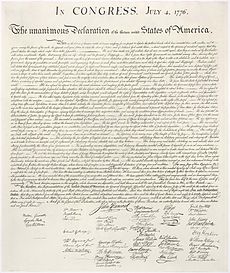
230px-Us_declaration_independenceWay back in 1997, I compiled, edited, and introduced a small collection of source materials about the Declaration of Independence. It was fascinating to explore the Story of that great document. Here is the epilogue I wrote for the book:

What really happened during those first four fateful days of July, 1776? As the previous pages of this book suggest, the truth is somewhat at odds with popular legend. American independence was actually approved by Congress on July 2, not on July 4; the vote was twelve to zero, with New York abstaining. New York voted in favor of independence on July 7, finally making the decision unanimous. The adoption of the Declaration of Independence on July 4 was regarded by the delegates as little more than a legal formality—with important public relations implications, of course.

Perhaps most surprisingly, there is no evidence that a signing of the document took place on July 4. The only signatures put onto the document on that day seem to have been those of Congress’s president, John Hancock, and its secretary, Charles Thomson. The iconic engrossed copy of the Declaration didn’t become available for signing until August 2. Many of its famous signatures were not added until weeks or even months after that. Some of the signers had not been present in Congress on July 4, 1776, to vote on the Declaration’s adoption, while some delegates who had been present on that day never became signers (Garry Wills, Inventing America: Jefferson’s Declaration of Independence, New York: Doubleday, 1978, p. 339).

But the myth of a July 4 signing has proven very powerful—so powerful that Thomas Jefferson and John Adams both mistakenly came to believe that it had actually happened! Through good intentions and faulty memories, the two most important instigators of American independence generated their share of misinformation about the Declaration of Independence.

John Adams was correct, however, when he wrote to his wife, Abigail, on July 3, 1776, “It may be the Will of Heaven that America shall suffer Calamities still more wasting and Distresses yet more dreadfull.” The Revolutionary War would continue its destructive course until the United States defeated the British at Yorktown in 1781 with the help of the French Fleet. Even after peace was declared in 1783, the new nation still faced the question of how to govern itself. The Federal Constitution, which went into effect in 1789, created a strong union but left the problem of slavery unsolved. It would take the tragic and terrible Civil War (1861-1865) to bring an end to slavery, but race relations in America remain deeply troubled to this day. With such a turbulent history, perhaps we should be grateful for the benign mythology surrounding our Declaration of Independence and its ennobling language.

The most magical story told about Thomas Jefferson and John Adams happens to be true. On July 4, 1826, the fiftieth anniversary of their Declaration’s adoption, both men were on their deathbeds. That morning, Jefferson awoke from a coma to ask his bedside companions, “Is it the Fourth?” He died shortly after noon. Adams passed away later the same day after murmuring these haunting last words:

“Thomas Jefferson survives.”

Talking Leaves: Sequoyah and the Conjurors — a short play

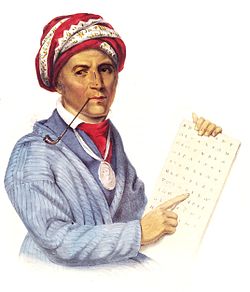
250px-SequoyahCharacters:

Three Cherokee Conjurors
Sequoyah

The scene is a forest clearing near the Cherokee town of Willstown, Alabama, in 1821. Sequoyah stands facing three conjurors, a leather bag hanging from his shoulder.

1ST CONJUROR.  George Guess, do you know why we have summoned you?

SEQUOYAH.  So I may plead for my life. But I don’t know why. You’ve already decided to kill me.

1ST CONJUROR.  It’s said that you’re possessed by an evil spirit.

SEQUOYAH.  A shee-leh.

2ND CONJUROR.  Yes.

SEQUOYAH.  And the only way to destroy a shee-leh is to kill the creature it possesses. Go on and do it, then.

2ND CONJUROR.  But is it true?

3RD CONJUROR.  Are you possessed?

SEQUOYAH.  Wouldn’t I be the last to know?

1ST CONJUROR.  Tell us.

SEQUOYAH.  So I must plead for my life, or you’ll bore me to death. Wait just a moment …

(SEQUOYAH reaches into his bag, takes out a small wooden board, a few pieces of paper, and a pencil. He squats on the ground, puts the board on his knees as a makeshift desk with paper on top of it, then takes the pencil in hand.)

SEQUOYAH.  I’m ready.

3RD CONJUROR.  What are those things?

SEQUOYAH.  This is paper, of course. But here’s something new, even to me. A pencil, white men call it. Like a pen, except it doesn’t use ink. Yesterday I bought a dozen of them from a passing white peddler. A fine tool. Have a look.

(SEQUOYAH holds the pencil toward the CONJURORS, who draw back fearfully.)

SEQUOYAH.  It won’t bite. Just a little wooden rod with a core of hard black stuff—graphite, it’s called. When it’s whittled to a point, the graphite leaves lines—like ink, only dry. While I’m weeping and groveling, I don’t want to keep dipping a quill in an inkwell.

(SEQUOYAH begins to write.)

1ST CONJUROR.  What are you doing?

SEQUOYAH.  Writing down what we say.

2ND CONJUROR.  So you use your magic right in front of us!

3RD CONJUROR.  The magic of talking leaves!

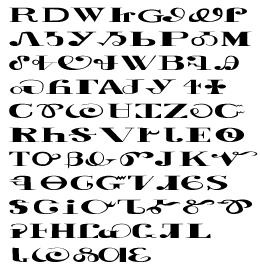
SEQUOYAH.  It’s not magic. I learned how to do it on my own. I listened to the sounds of our speech, then made up marks for them.

1ST CONJUROR.  White men make marks like yours. They’re evil magic.

SEQUOYAH (writing furiously).  Could you talk more slowly?

1ST CONJUROR.  We’ll talk as fast as we like.

SEQUOYAH.  Well, then. I won’t try to write everything.

(SEQUOYAH writes more slowly, and only intermittently.)

SEQUOYAH.  Talking leaves give the white man power. He can put his thoughts on paper, then send those thoughts to a friend far away—over hills, plains, and rivers. Then that friend can reply with leaves of his own. Talking leaves destroy distance—that great, invisible shee-leh that thwarts us all. Without talking leaves, the white man could never subdue us. They are his most powerful tool.

3RD CONJUROR.  His tool, not ours.

1ST CONJUROR.  His way, not ours.

SEQUOYAH.  How odd. I sit here accused of practicing his magic while neglecting my cattle and hogs, my plow and manure. But farming is the white man’s way. He forced it upon us to stop us from hunting and roaming. If I tear up my magic leaves, will you burn down your barns, kill your livestock, salt your fields? And what about horses, which I’m told the white man brought here ages ago?

1ST CONJUROR.  Horses have always been ours. The Great Spirit gave them to us.

SEQUOYAH.  Well, so you say. What about rifles? Each of them is stamped with the name of the white man who made it. Give yours to me, and I’ll melt them down in my forge, make lumps of iron out of them, put them back in the hills where they belong. Oh, but I forgot—blacksmithing is also the white man’s way. I must destroy my forge. To become pure Cherokee again, we must reject all the white man’s ways—even those we need to defend ourselves against him.

(Pause)

3RD CONJUROR.  Tell us, George Guess—do you know why talking leaves belong to the white man and not to us?

SEQUOYAH.  I’ve never heard the story.

1ST CONJUROR.  In the beginning, the Great Spirit created us real people, and then he created the white men. Because we came first, he gave us a great gift—books with talking leaves that would grant our every wish. To the white men, he gave a lesser gift—the bow and arrow. But we Indians never bothered to use our books. They lay gathering dust. At last, the white men crept along and snatched them away, leaving bows and arrows in their place. Since then, we have lived short, hard lives pursuing and killing creatures of the wild, while the talking leaves have blessed the white men, giving them command of all creation. The Great Spirit has never forgiven our neglect and thanklessness. Few are the blessings he has granted us.

(SEQUOYAH laughs.)

1ST CONJUROR.  You find it funny?

SEQUOYAH.  Yes, because I know the real truth. The moon laughs—laughs loudly, day and night.

2ND CONJUROR.  I’ve never heard the moon laugh.

SEQUOYAH.  Neither have I. But the white man does hear it—and the Great Spirit blesses him for that.

3RD CONJUROR.  This story is a lie.

SEQUOYAH.  But it was told to me by my mother—Wurteh, sister of Old Tassel.

2ND CONJUROR.  The sister of Old Tassel could never lie.

SEQUOYAH.  Ah, but mightn’t I lie—say that my mother told me a story when she didn’t? And how can I know that your story isn’t a lie? How can we Cherokee ever know what’s truth or lie, fact or imagination? The white man knows. His talking leaves tell him.

(SEQUOYAH shows them a piece of paper.)

SEQUOYAH.  Imagine that my mother had written the story of the laughing moon on this paper, many years ago. Imagine that she swore to its truth by making a mark right here—a mark that was hers alone. Would you believe it then?

1ST CONJUROR.  Yes.

SEQUOYAH.  Then you grasp the greatest gift of the talking leaves—the gift of memory. The white man knows who he is, remembers all he has done, possesses a power he calls history. We Cherokee scarcely remember our grandfathers. And though our heads are full of old stories, how can we be sure that we recall those stories aright? Have we changed them in telling and retelling them again and again?

3RD CONJUROR.  We trust the Great Spirit to preserve the truth of our stories.

SEQUOYAH.  Yes, and it’s your job to keep telling them. But look at yourselves. You’re old and near death. How many young men stand trained and ready to carry on your work? None. The missionaries have converted them all to the white man’s religion. This way of writing I’ve made—it’s all that stands between you and forgetfulness. Your spells, your charms, your medicines, your wonder-working dances and songs—all will be lost without magic leaves.

(Silence)

SEQUOYAH.  You don’t care, then? I see you’ve accepted the white man’s religion after all.

1ST CONJUROR.  We’ll never do that.

SEQUOYAH.  Oh, but you have. You love your enemies, bless those who curse you. And if a man steals your coat, you give him your pants and shoes and hat as well. And if he hits you on one side of the head, you turn so he can hit you on the other side. And most of all, you always do for others what you wish they would do for you. And why should I blame you? Those are good ways, blessed ways. After all, the missionaries teach that the meek shall inherit the earth.

2ND CONJUROR.  The meek inherit nothing.

3RD CONJUROR.  The white man overruns the earth by force.

SEQUOYAH.  That’s the clever wickedness of his religion. Its lessons are meant to be disobeyed. When their chief spirit came among them, the first thing the white men did was kill him. They fastened him to a tree with iron barbs made in their forges, riddled him with spears, tormented him with thorns, until at last he died of pain. When he returned from the dead, he blessed his murderers for their cruelty—and that’s been the secret of the white man’s religion ever since. When they disobey their spirit, he blesses them; when they obey him, he curses them. Always do what the spirit says not to do—that’s the white man’s creed. Disobedience is the only path to Christian salvation. But every day, the missionaries teach our children to obey this religion of disobedience, making them fit for slaughter. Our only weapon against this evil is the talking leaves.

(Silence)Sequoyah_Arranged_Syllabary
SEQUOYAH.  And I’ll show you how to use them. Do you wish it?

(Silence)

SEQUOYAH.  Well. Stop calling me by the name I got from my white father. Call me by the one my mother gave me. I’ll write it for you sound by sound. Look.

(The CONJURORS huddle around SEQUOYAH, watching as he writes.)

SEQUOYAH.  Se … quo … yah.

END OF PLAY

The Fair Youth of the Sonnets

Image

“The best response to a poem is another poem.”

I don’t know who first said that. But I try it out myself every now and then, whenever a poem leaves me with nagging questions. Consider Shakespeare’s Sonnet XVIII …

Shall I compare thee to a summer’s day?
Thou art more lovely and more temperate:
Rough winds do shake the darling buds of May,
And summer’s lease hath all too short a date:

Sometime too hot the eye of heaven shines,
And often is his gold complexion dimm’d;
And every fair from fair sometime declines,
By chance, or nature’s changing course, untrimm’d;

But thy eternal summer shall not fade
Nor lose possession of that fair thou ow’st;
Nor shall Death brag thou wand’rest in his shade,
When in eternal lines to time thou grow’st;

So long as men can breathe or eyes can see,
So long lives this, and this gives life to thee.

I’ve often wondered just how the fabled “Fair Youth” of Shakespeare’s Sonnets felt about this bit of flattery. Is it even flattery? If so, just who is being flattered, the subject or the poet? And how might the youth have responded in lines of his own? Here’s my own best guess …

Who cares if I am lovely and serene?
Your summer’s day is all they shall recall:
Rough winds, wracked buds, the sky’s sweltering ball—
Nothing of me in all your torrid scene.

What of my blest and tantalizing dimple
Which you have likened to a sylvan lair
Wherein you dedicate yourself to prayer?
Fine figure—so felicitous, so simple!

Such words alone would grant the lasting fame
Of that fat knight who from all havoc flees,
That gypsy queen of wild varieties.
Why not at least have written down my name?

The deathless days you promised for all time—
You’ve granted them to nothing but your rhyme.

Image