I’m Nobody! Who are you?
Are you — Nobody — too?
—Emily DickinsonHistory, Stephen said, is a nightmare from which I am trying to awake.
—James Joyce, Ulysses
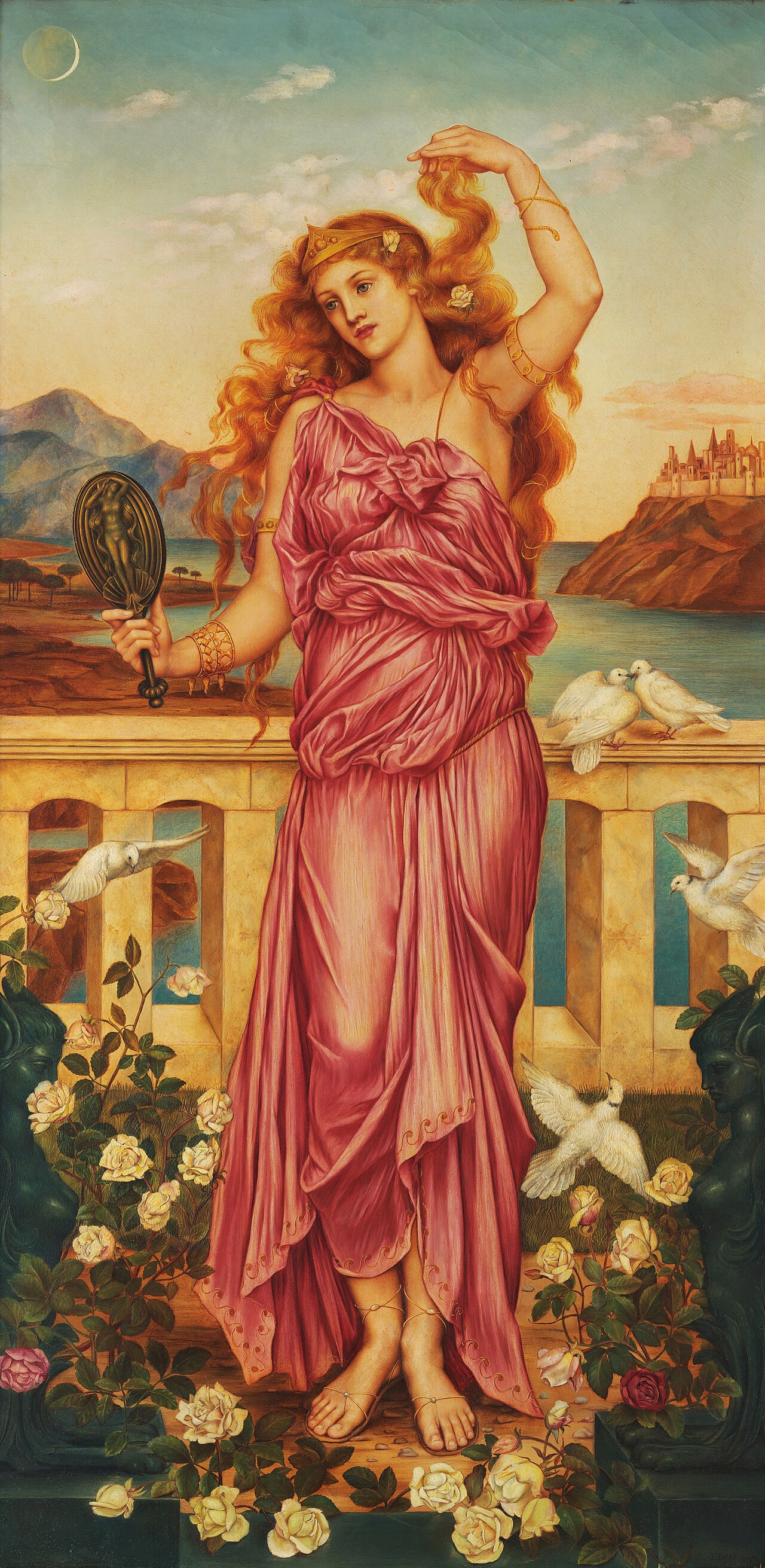
Characters:
HELEN OF TROY
HELEN’S REFLECTION
The play takes place inside a tent near the walls of Troy. The Trojan War has just ended; the flicker of flames from the burning city can be seen through the fabric. Trojan women are heard moaning and weeping outside. Helen sits looking into a mirror; her reflection looks back at her, mimicking her movements until it begins to speak for itself.
HELEN.
Mirror, mirror—it’s now or never.
I’ll know soon whether I’m to live or die;
it’s up to Menelaus to decide.
When the war started, you promised
to tell me a secret whenever it ended.
Well, the war has ended.
The Greeks are burning Troy right now;
they’ve ruined the city and everything in it—
everything except this face that killed thousands of men;
time and hatred, twin warriors of ruin, have done that for them.
So keep your promise. Tell me now.
REFLECTION.
Such foolish chattering, when your life is at stake.
Get to work now, try to save yourself.
HELEN.
How?
REFLECTION.
Do you really need me to tell you?
Don’t you still have your box of pretty lies?
(HELEN opens a decorative box.)
HELEN.
Yes, everything’s been taken from me
except for that—and you.
REFLECTION.
Well, you need lies now—lies to soothe your husband’s anger
and make him believe you worth ten years of stupid carnage,
lies spread thick to hide the truth,
these acres of cracks and flaws and furrows.
Now get to work—and quickly.
(As the REFLECTION speaks, HELEN applies makeup from the box.)
REFLECTION.
First, honey and oils to soften this brittle flesh,
deep beetroot dye to brighten these bloodless cheeks,
mulberries crushed in beeswax
to make moist and red these scorched and pallid lips,
and antimony, too, to shroud these swollen eyes—
for beauty, false or true, is impossible without a pinch of poison.
And last, dabs of tinctured marjoram, myrrh, and spikenard,
so you’ll smell sweet—or to hide the scent of fear.
HELEN.
These jeweled combs and pins, this gold diadem—
they’re tarnished and need polishing.
REFLECTION.
They’ll have to do.
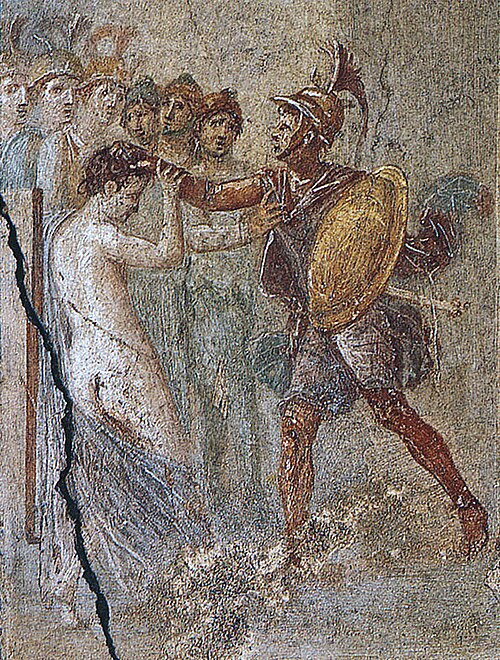
(The WOMEN’S VOICES are shouting: “Kill her, Menelaus! Kill Helen! Kill her now!”)
HELEN.
My golden-haired husband has arrived.
REFLECTION.
Yes, and scented now with lilies and roses, not the sweat of battle.
Queen Hecuba and all the Trojan women still alive
beg him to put you to the sword
instead of carrying you back alive to Sparta.
They’ll soon be shipped to Greece,
enslaved or turned to whores, and all because of you.
So who can blame them?
HELEN.
Well.
The choice isn’t mine.
These gaudy lies must do their work or fail.
Menelaus, I come.
(HELEN turns to go.)
REFLECTION.
Wait.
Don’t you want to hear my secret?
HELEN.
I didn’t think you’d tell me.
REFLECTION.
I may be a liar, but I keep my promises.
Sit with me a moment.
(HELEN sits again and starts to weep; REFLECTION reaches out of the mirror and dabs her eyes.)
REFLECTION.
Oh, don’t, my dear, you’ll ruin all your hard work.
HELEN.
Why am I to blame?
I never chose anything, any of this.
REFLECTION.
Then whose fault is it?
One civilization staggers home to lick near-mortal wounds,
another will soon lie in a heap of rock and glowing embers.
Troy and Greece alike have lost their most precious manhood—
great-hearted Patroclus slain by horse-taming Hector,
Hector by swift-footed Achilles,
Achilles by magnificent Paris,
and Paris by … oh, I have lost track.
And poor mad Ajax, killing innocent sheep
until he threw himself upon his own sword.
But last night—worse than all ten years of carnage,
women dragged from their houses and raped, their children slaughtered;
blood now pools in the streets, black and thick like tar.
Someone must be to blame.
HELEN.
Enough. Your secret. You promised.
REFLECTION.
Yes, the secret.
Tell me—where were you last evening
before the slaughter of all innocence began?
You did something interesting, I believe.
HELEN.
What does that have to do with—?
REFLECTION.
Tell me.
HELEN.
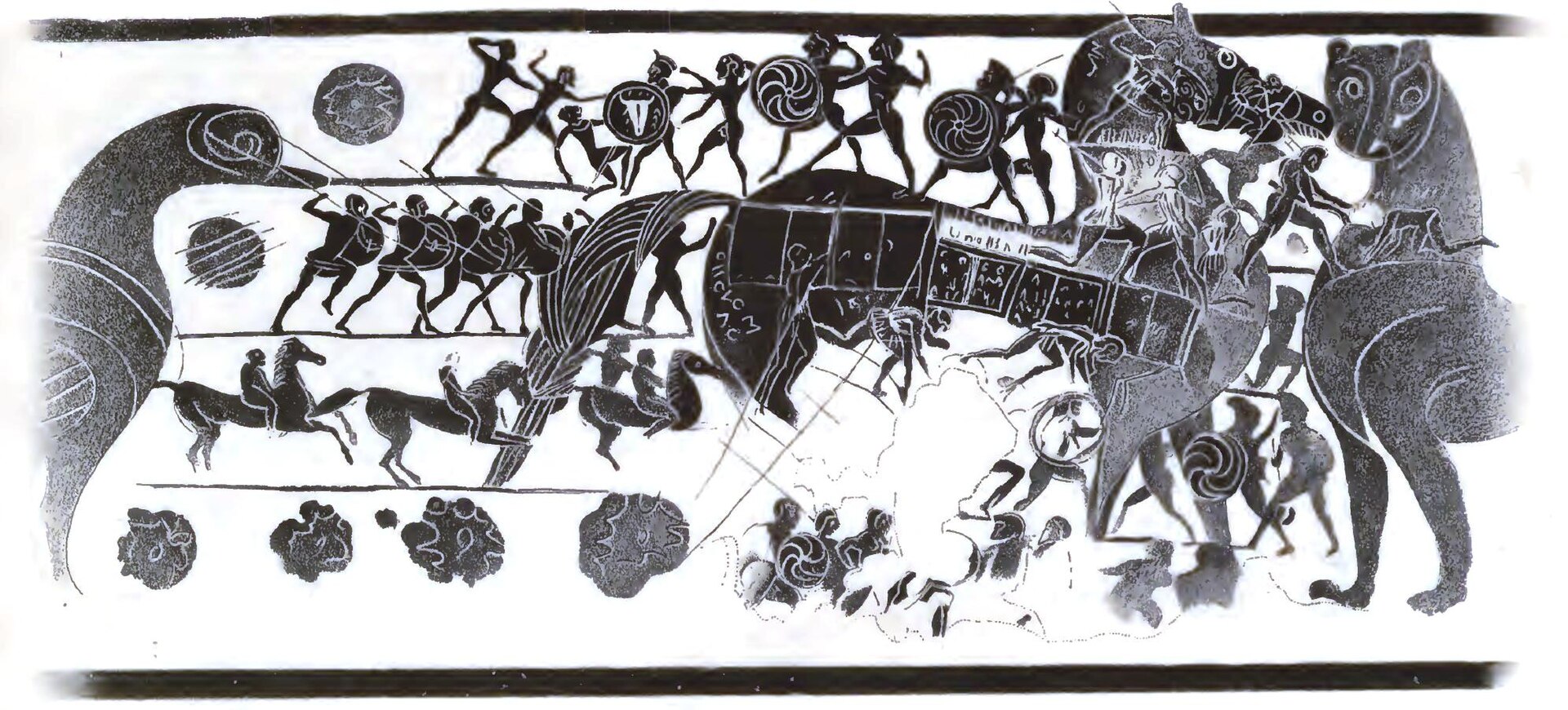
I went out of the palace to see the gift—
that wooden horse the Greeks had brought as a ruse,
standing silent in the bloody sunset.
When no one else happened to be nearby,
I touched its sides and sensed what no Trojans yet had—
the presence of some forty soldiers
waiting for the silent hour to climb out and open the city gates.
And as I walked around the horse, I pretended …
REFLECTION.
Pretended?
HELEN.
No, became Aegialia, the lovely bride
Diomedes left behind those ten long years ago;
I whispered through the horse’s ribs
of aching pleasures he’d dreamed of all those nights—
pleasures only I knew how to give.
I heard him weeping and walked on round the horse
and then became Laodice, King Priam’s daughter,
loved by the Greek Acamas before the war began,
but parted from him ever since;
I sang a little love song we used to sing together,
which made him weep as well.
And round I went again and again
until the soldiers groaned and sobbed with homesickness,
almost loud enough for someone else to hear.
Crouched at last beneath the horse’s belly,
I became patient Penelope, Odysseus’s wife,
and murmured what a fine young man his son
was growing up to be back home in Ithaca,
and what a shame it was he didn’t know his father.
But wily Odysseus alone did not weep;
instead, he forced the others to be silent.
I went back to the palace and tried to sleep
until I heard the madness in the streets.
REFLECTION.
So you became those women in those moments;
what makes you think you’re Helen now?
In fact, you’re none of them, and not Helen, either.
You’re no one at all—a cloud, a mist, a vapor,
shaped by Queen Hera in a woman’s form to trick all men;
a phantom for Paris to abduct in the true Helen’s stead.
HELEN.
No. It’s impossible. How can somebody be … ?
REFLECTION.
Nobody at all?
HELEN.
I feel pain, so much pain,
the salt-sting of tears on this cheek,
blows of time and hatred bruising my flesh,
splinters of lies stuck in my tongue,
broken shards of shame cutting my heart.
I feel it all.
REFLECTION.
Pain, too, can be a cloud, a mist, a vapor.
None of what you feel is real.
HELEN.
And the real Helen?
REFLECTION.
Hermes spirited her away when you were made—
far away for safe-keeping until the war is over
when she will be returned to her husband in Sparta
and he will never be the wiser.
HELEN.
I don’t believe this. Look at me.
I’m growing old, I’m crumbling like this city’s walls and hopes.
What need has a cloud for lotus flowers and marigolds,
lavender and chamomile and resin?
What need has a phantom for a box of lies?
REFLECTION.
What kind of illusion would you be
if you didn’t fade and decay?
The real Helen has passed these years
untouched by time, by hate, by men,
while you, her phantom, succumb to the ravages
of a woman’s vanity and pride.
And that’s as it should be.
Now go to your husband without fear,
for you will be perfect in his eyes.
The perfect woman and the perfect cloud—
they are the same thing, infinitely mutable,
ever shaping themselves to men’s thoughts and dreams,
mere reflections, phantoms of the mind.
Those weeping women of flesh and blood outside,
so full of grief, terror, and thoughts all their own—
they’ll never make their captors happy.
Someday Menelaus will sit gazing
at the real Helen by firelight wondering,
“Who is this woman? How dull and real she is!
Why ever did we fight a war for her?”
But wars must be fought.
Any excuse will do.
That’s what clouds are for.
HELEN.
They are proud, aren’t they, those men who still live?
REFLECTION.
Oh, yes. They have made the best war there has ever been.
They can think of nothing grander to do than that.
(HELEN speaks with mounting anger.)
HELEN.
Such heroes they are!
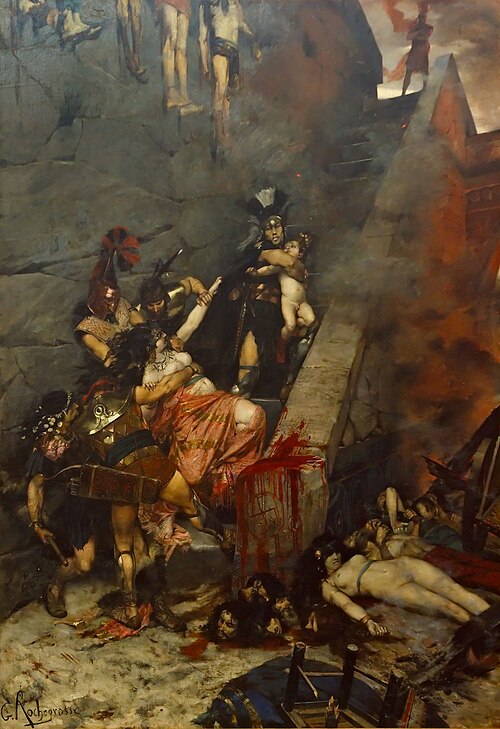
A short while ago they killed a little boy—
Astyanax, son of Andromache and Hector.
They tore him from his mother’s arms
and hurled him from high battlements to his death.
How scared the poor child must have been!
And how brave the Greeks felt killing him!
It was the last and proudest deed
of a war they fought not for treasure or glory or power,
nor even for a whore of flesh and blood,
but for nothing—no thing at all. For me! A cloud!
REFLECTION.
Go to him now. Don’t put it off.
HELEN.
What’s to become of me when I’ve fulfilled my purpose—
when Menelaus reaches home
and holds the real Helen in his arms?
REFLECTION.
You will dissolve, of course;
you’ll disappear into thin air.
HELEN (laughing).
Oh, no, my friend, I think not.
REFLECTION.
I’m telling you the truth.
HELEN.
And I believe you—I am a cloud.
REFLECTION.
Yes, impalpable and weak.
HELEN.
A moth is weak,
but its wings seize gusts of air by the fistful
and forge from them rain and hail and wind,
cacophonous lances of fiery lightning,
surging waterspouts, torrential desolation,
downbursts of the sheerest terror.
A single moth flings its slumbering tempests awake
across the world, and I will do the same.
I may be weak, but I gather the strength of uncreation.
I’ll seize the thunderbolt from Zeus’s hand,
the earthquake trident from Poseidon,
force Hades to unlock his iron doors
and let death itself rush forth.
I’ll chase the gods away from sea, earth, and sky,
and rob the cosmos of every vestige of divinity.
REFLECTION.
A world without gods.
HELEN.
A world without meaning.
REFLECTION.
You almost frighten me.
HELEN.
My own face, frightened of me! Good!
Now what do you see when you look at me?
REFLECTION.
You have become Chaos primordial
born anew into this rotten world,
a scourge of rage and tumult
filled with hatred for this age of heroes.
HELEN.
The peaceful Aegean stretches now
between the Greeks and home
promising them a safe and easy voyage.
But the salty dregs of the deep shall rise into mountains
at my shrill clarion command
to shatter and thwart and destroy them.
Oh, I must go to Menelaus now,
this very instant! I’m ready!
REFLECTION.
No, my dear—you mustn’t hurry;
why not savor your honeyed vengeance?
You have eternity at your command;
yours is the power to turn all mortal kin
against themselves and each other, against their world,
to goad men to make mad and futile war
upon the earth, sea, and sky,
until the elements put them to the end they well deserve.
Let this moment mark the end of legends;
from now on, let the nightmare of history
wreak its patient annihilation.
HELEN.
Oh, yes—how sweet!
REFLECTION.
Besides, you mustn’t let your unwary husband
see you in this dreadful form;
he’ll flee from you, and that will be the end of it.
To work again with your box of lies.
(HELEN opens her box again.)
HELEN.
What picture shall I make of myself today?
REFLECTION.
Do you need to ask? A pretty, painted moth.
(HELEN makes herself up as women howl and flames roar.)
END OF PLAY.
—Wim