The Hoax Principle …

“… that fictional ideas, like placebos,
can attain an astounding level of reality
through sheer persuasive force.”

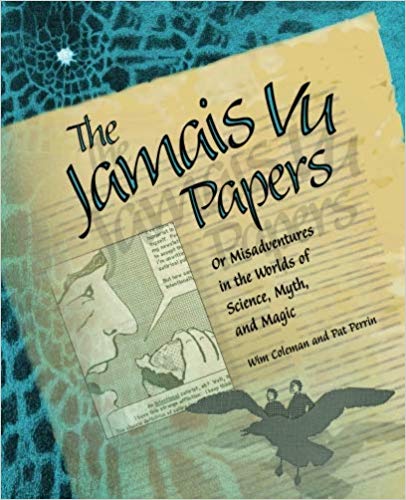
Who would have believed that fictional characters would simply refuse to be remaindered along with physical books? After The Jamais Vu Papers was published by Harmony Books in 1991, it sold a few thousand copies and then seemed doomed to disappear as books did when major publishers lost interest in them. Two decades later, after we got complaints that the book wasn’t available anywhere, we republished it ourselves. A small audience continues to follow our erratic story, and a modest number of copies sell every year. That seemed to be the end of the story.

We did take note that our character Llixgrijb succeeded in walking off the pages and taking on a life of his own, turning up in a variety of guises and languages. Those connections seemed amusing, probably harmless, and again we thought that was the end of it.

But the words of another fictional character from our book have taken on new life today. Imogene Savonarola, a renowned neuroscientist at the Institute of Neuroreality, “determined that the brain possesses receptors for paradox” and hypothesized the existence of a neurotransmitter which she called the “oxymorphin.” Explaining that “The oxymorphin is almost wholly dormant in modern man, except when it is occasionally sparked by direct encounter with a common metaphor,” Savonarola set about producing a chemical equivalent, creating chaotic adventures that make up much of our tale.

In another of her publications, Savonarola discusses a very timely concept: how fantasy can become empirical reality through “The Hoax Principle.”

“Flat-out lies can come true if they appeal
eloquently enough to the credulity
of both sides of the mind/brain.”

She describes false ideas as placebos, those sugar pills or meaningless procedures that can seem to cure disease if the consumer believes they are real medicine. (See Harvard report) Whatever we might think of Savonarola’s scholarship, it does seem that in our own time, an extraordinary consumption of placebos has activated the dark side the process she describes.

Pat

Ecclesiastes (poem)

(Upon reading “Mind at the End of Its Tether” by H.G. Wells)

Saith the Sage,
there is no Shape of Things to Come;
there is only the Coming of Shapelessness.
Maps crumple—yea, and also the landscapes they signify—
into dimensionless wads of nothing;
the clock’s hands are blurred the whole way round;
the eons snap their fingers in our faces.
The very NOW contracts its steel coils
and breaks our ribs and squeezes our breath away.
There is no way out or round or through.

The bitter wisdom of the Sage
begins with the knowledge of vanity;
the multitude is not disposed to know
and so it will never know.
In the glass-walled formicary of this world,
the ants keep faith in the magical placations of their leaders, 
whose bigotries blossom into radiant cruelty.
The subservient fear-haunted mind
in its blind libidinous craving to exist
retreats into a sanctuary of jaded reassurance,
the idiot’s recital of the everyday.

There is no way out or round or through;
the way ahead is steeply up or steeply down.
May mind climb the rungs of the air
and the worm aspire to the stars?
To go steeply up is to cease to be human;
our heirs are creatures we know nothing of.

Gluttonous time devours us all;
the cherished delusion of recurrence is dead;
gravitation’s golden cord is frayed;
earth slows in its spinning,
and the years and days grow longer;
the equinoxes wobble in their precession;
night no longer follows day, nor day the night;
there are naught but new things under the dying sun;
we lie when we say we have seen them before.
There is no way out or round or through.

Now that mind,
that strange intruder,
that peculiar throb in matter,
is at its final ebb,
the grinning Antagonist goads us with the riddle:
“Is this all?”
For the more we reach the less we grasp
in saecula saeculorum—
for ever and ever.
Amen.

—Wim

Appeared in The Thieving Magpie, Issue 9, Spring 2020.

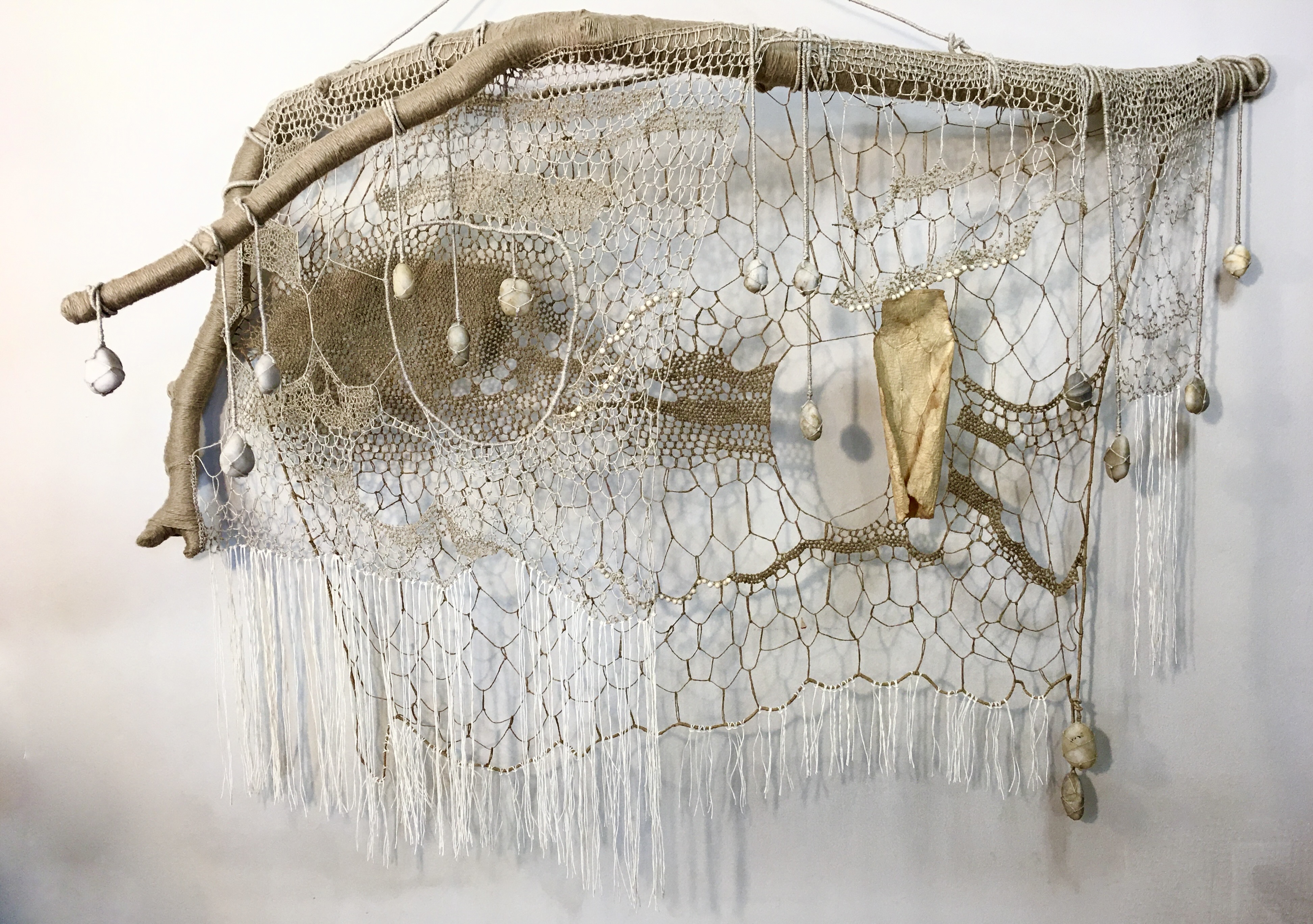
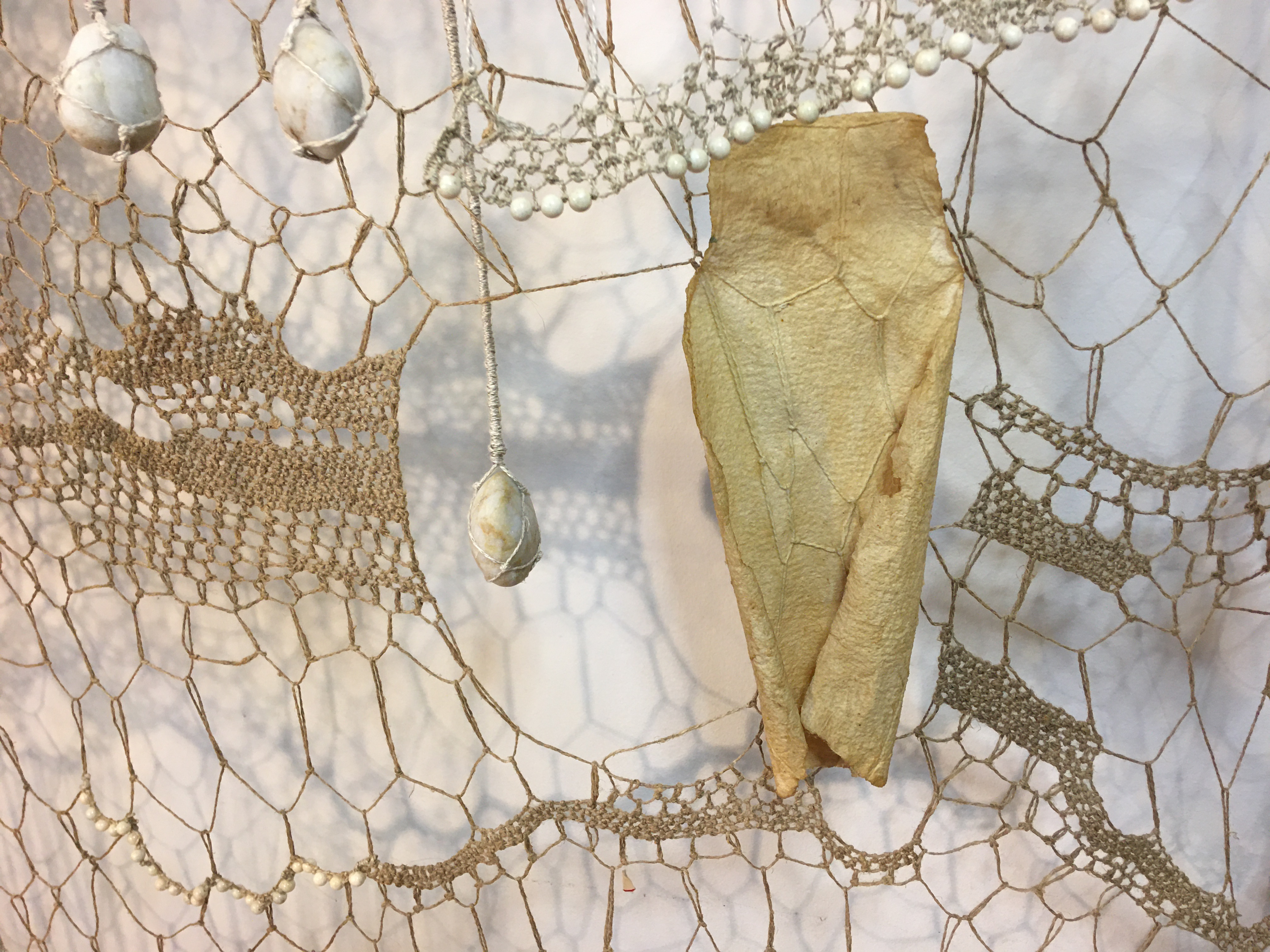
World’s Oldest String Found at French Neanderthal Site (poem)

Given the ongoing revelations of Neanderthal art and technology, it is difficult to see how we can regard Neanderthals as anything other than the cognitive equals of modern humans.

—Hardy, B.L., Moncel, M., Kerfant, C. et al. Direct evidence of Neanderthal fibre technology and its cognitive and behavioral implications. Sci Rep 10, 4889 (2020).

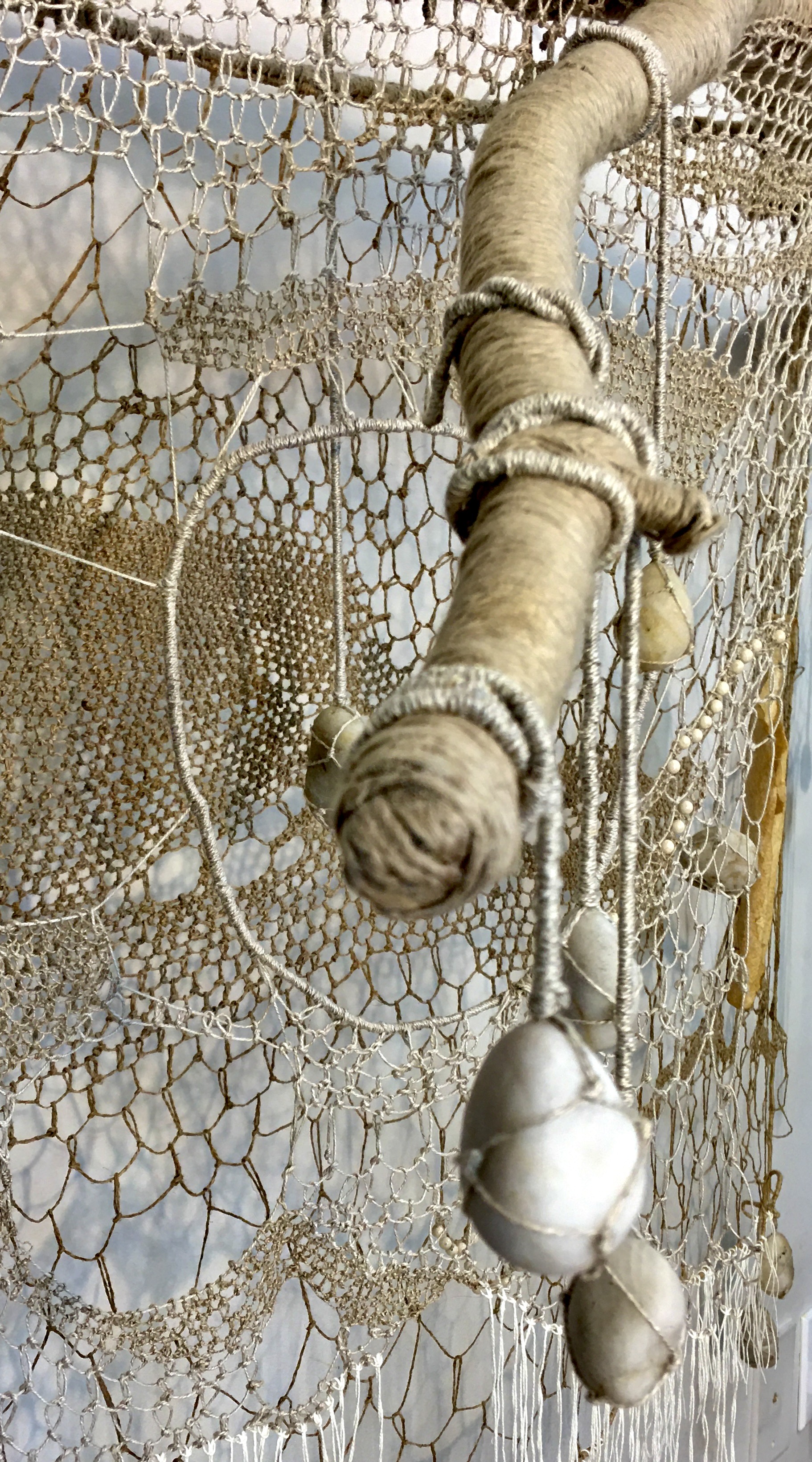
Ask the young tree
when the day gets pungent with blossoms
whether it is ready and willing
and if the tree says yes
let it start working.

The tree will glide the flint’s edge
through skin that bleeds
pale and clear as you cut it
skyward to earthward
then in crueler horizons
high and also low.

The skin will tease itself free
revealing its secret inner face
of infinite tendrils.
(The naked sinew of the tree
will taste sweet to the tongue.)

Three slim bundles
will strand off brightly
and sing their song of weaving
leading your fingers
whirling toward the river
while your wrist
bends ever toward the mountains
and the womb of your palms
gives birth to new vine
and the new vine’s secret.
We begin and we end
but it needs not be so

for the birthing of this vine
into its life of dance and song
needs never end
even as it frays behind us.
So may our birthing
yours and mine
partner ever with our dying
on and on and on
until

*

Poem appeared in Sisyphus, Summer 2020.

Photo by Neanderthal-Museum, Mettmann.
Licensed under the Creative Commons Attribution-Share Alike 4.0 International license.

The Cave of Euripides on Salamis Island (poem)

From I.O.U., Wim’s new book of poems, available at Amazon.com.

written for the dedication
of the William S.E. Coleman Studio Theatre,
June 18, 2016

But were you ever really here?
Did you sit here brooding upon this cave’s sullen lip
gazing over the bay of doves,
a shrouded exile from lies and war and treachery,
holding your worlds within?
Did you come away from Athens to this dead heart,
its throbbing chambers long since stilled and petrified,
its arteries and veins drained of their wine?
And were you ever really here?

This clay shard with letters of your name proves nothing.
Your acolytes came here seeking you;
finding nothing but an empty cave,
they wrote your name upon a bowl
and drank from it in prayer
and sang your verses to these deaf damp walls.
Your acolytes were fools
not to pass on through these walls of fog
into joys deeper than woe, time higher than thought;
for there is no firmament above our heads;
the starry void goes on forever;
our lives do not.

Let’s go away
and carry our riches to an empty room
that bears your name upon its door,
a space that’s rough, immediate, and holy,
where dreamers walk and dance
and sing their dreams awake to one another,
where sacred lies and probabilities abound,
where stories are told and worlds transfigured,
where stone chambers of the heart turn flesh again
pulsing with the sweet wine of eternity,
most terrible and gentle to us all.

5WFu1ZtyQBuyGNdXhVCHag_thumb_5e89