My 90th Birthday

Reaching my 90th birthday seems to be important, but in another sense, this is just another day in a life full of a lot to think about and usually too much to do. There’s an unfinished fiber piece hanging on the wall that I haven’t gotten back to in months. There are art supplies ordered and so far unused. And there’s an unfinished novel lurking in my computer that’s a work of collaboration with Wim. (We’ve set a deadline for ourselves this fall and that’s where most of my creative effort goes right now.)

There are always freelance writing assignments to finish in order to pay the bills, and of course, there’s everyday life. (I do get help with those daily demands from both my daughter and husband.) The questions I get from random people are usually about how I am still on my feet. But there’s also that unspoken question: How is it I’m still here at all?

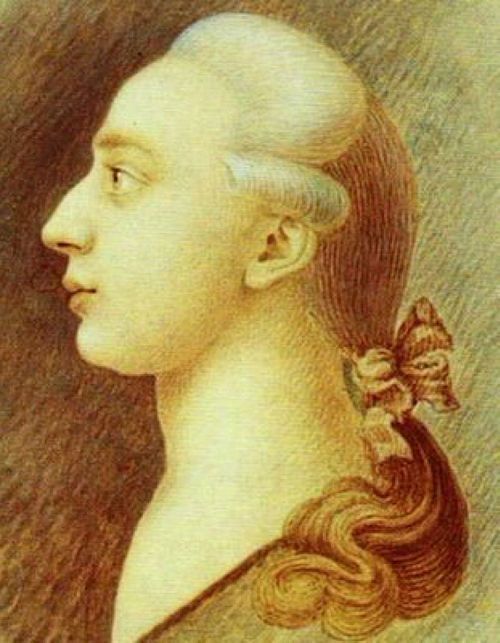
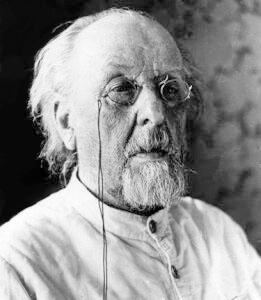
Photo from my computer camera yesterday.

Not that things are working perfectly. Of course there are lost words, dates, and specific memories — but the truth is, I was never good at knowing what happened when. A lot that took place between 1935-2025 doesn’t come into focus easily, but I’ve usually been centered on the present anyhow, or perhaps just outside of time. That has always had its disadvantages, of course, from long-ago history classes to present-day schedules.

The questions people ask about how deserve some thought. Some of the necessities seem to include a decent set of genes, physical activity, and mental and creative interests and efforts. Here are a few that make sense to me.  

Curiosity
What is the trick to aging successfully? If you’re curious about learning the answer, you might already be on the right track, according to an international team of psychologists, including several from UCLA. Click here to read an article by Holly Ober about curiosity and aging.

Optimism
This one gets difficult when the world seems to go askew. But an article in The MIT Press Reader relates optimism and longevity. Click here to read an article by Immaculata De Vivo on this topic.

Change
The flexibility to deal with change is an essential when this much time goes by. Neuroscientist Anne-Laure Le Cunff comments that, “We often think of change as something to endure. But change is how we grow.” Click here to read Le Cunff’s article about how curiosity transforms uncertainty from a threat into an invitation

Make Life an Artwork
An article in the online publication Philosophy Break quotes Nietzsche on finding our true selves and suggests that we “view our lives as an artistic project.” I’d add that you have to be able to think of such a project as open-ended, not something to ever be finished and framed. Click here to read Jack Maden’s article about what Nietzsche has to say about shaping our lives creatively.

Of course there’s no one answer. If we humans can be whoever, whatever, wherever we are — people just relating to other people — we can better enjoy whatever time we manage to have.

Pat

“The Cruelty Is the Point”

It’s been almost five years since I posted some thoughts about Mark Twain’s A Connecticut Yankee in King Arthur’s Court and how it relates to our times. Revisiting those thoughts today, they seem even more sadly apt than they were back then.

Illustration by Daniel Carter Beard for the 1889 edition of A Connecticut Yankee in King Arthur’s Court

A Connecticut Yankee is mysterious and disturbing book, so unlike its reputation that one can only assume that few people really bother to read it. It starts off as a light-hearted satire of medieval times and climaxes with an apocalypse of sorts—the mass slaughter of Europe’s knight errantry by electrocution, dynamite, and a Gatling gun.

But perhaps the book’s most unsettling episode involves children. When the protagonist, Hank Morgan, takes King Arthur on an incognito tour of the brutal realities of his kingdom, they witness a spree of mob violence in which peasants turn against peasants, butchering and hanging one another out of blind fear of their rulers. The next day, Hank and the king come across this scene:

A small mob of half-naked boys and girls came tearing out of the woods, scared and shrieking. The eldest among them were not more than twelve or fourteen years old. They implored help, but they were so beside themselves that we couldn’t make out what the matter was. However, we plunged into the wood, they scurrying in the lead, and the trouble was quickly revealed: they had hanged a little fellow with a bark rope, and he was kicking and struggling, in the process of choking to death. We rescued him, and fetched him around. It was some more human nature; the admiring little folk imitating their elders; they were playing mob, and had achieved a success which promised to be a good deal more serious than they had bargained for.

Illustration by Daniel Carter Beard for the 1889 edition of A Connecticut Yankee in King Arthur’s Court

Twain’s account of children hanging one another to imitate their elders is truly a fable for these days of Trumpism. The question is often asked: Do you want your children to behave like Donald Trump, with his blatant narcissism, bigotry, misogyny, name-calling, cruelty, bullying, crooked dealings, and interminable lies? While few Americans would admit it aloud, I suspect that an alarming number of them want exactly that. As Elon Musk himself said to Joe Rogan, “The fundamental weakness of western civilization is empathy.”

Specifically, empathy is held suspect in male children. It’s an idea that’s deeply ingrained in our culture—that empathy, fair play, and kindness are for sissies and “girly men.” Boys must instead be taught the opposites of all those traits in order to grow up to be “real men”—men with power, fame, and wealth like Donald Trump. Life is a zero-sum game, and “nice guys finish last,” and to be a man, one must never show weakness, shame, or scruples, nor ever concede defeat.

We often say of Trumpism that “the cruelty is the point,” especially when it comes to the treatment of immigrants and their families. But Twain wanted us to believe that cruelty is not innate but learned, and that childhood is the aptest time to teach it. In “The United States of Lyncherdom,” a polemic Twain wrote to protest the rise of murderous violence against African Americans, he tried to explain the viciousness of mobs as motivated by moral cowardice, not pleasure:

Why does a crowd … by ostentatious outward signs pretend to enjoy a lynching? Why does it lift no hand or voice in protest? Only because it would be unpopular to do it, I think; each man is afraid of his neighbor’s disapproval — a thing which, to the general run of the race, is more dreaded than wounds and death.

As bitter as Twain became toward “the damned human race,” I fear that he remained naïve about human nature. Cruelty may well be indeed learned and imitated, not innate; but once it takes root, it becomes an illness, an addiction. Some addicts don’t merely pretend to enjoy their drug of choice; they convince themselves of it.

As Huckleberry Finn put it upon witnessing an act of mob violence, “Human beings can be awful cruel to one another.”

—Wim

The King and the Duke are tarred and feathered; illustration by E.W. Kemble from the 1885 edition of Adventures of Huckleberry Finn

In the Name of Liberty …

Just as an individual, subjected to certain inner pressures beyond his endurance, will suddenly go mad and destroy himself or those around him, so too, apparently, can a segment of society take leave of its senses and deliver itself to the forces of destruction.

—Stanley Loomis, Paris in the Terror

These words written about the French Reign of Terror are scarily apt for America today. Perhaps that’s one reason why my yet-unproduced play The Mad Scene is getting quite a few readers these days. You can download the entire play here.

The Death of Marat, by Jacques-Louis David

Described as “an Our Town about the French Reign of Terror,” The Mad Scene tells a story of collective and individual insanity. As the Terror rages around her, the wax sculptor Marie Grosholtz (the future Madame Tussaud) uses the guillotined heads to shape her creations. Small wonder that she goes insane and holds conversations with wax figures of Marie Antoinette, Charlotte Corday, Maximilien Robespierre, and Jean-Paul Marat.

As ICE agents round up and deport alleged gang members to a Salvadoran mega-prison based on no sounder evidence than tattoos, and as foreign students with legal visas are detained and deported for exercising their freedom of speech, and as an American President wreaks lawless revenge upon his enemies, all with the sanction of far too many Americans, I’m reminded of the massacres of September 2-7, 1792, when Parisian mobs emptied the prisons of political prisoners and slaughtered them in staggering numbers.

In my play, the revolutionary firebrand Jean-Paul Marat harangues the mob:

Fools! The enemy is already here within our gates. Our prisons are full to bursting with aristocrats, priests, traitors, and conspirators, all of them lusting for revenge against every last Parisian who ever dreamed of liberty. And while you go out playing at soldiers fighting foreign enemies, they shall break out of their cells and slaughter your wives, mothers, sisters, and children.

Empty the prisons, kill every last enemy of freedom!

Kill them all before they destroy everything and everyone you love!

Vive la Nation!

Vive la République!

Le jour de gloire est arrivé!

The September Massacres took the lives of some 1200 people, including priests, monks, and nuns—a small number compared to the victims of the Reign of Terror yet to come.

As Madame Roland said before she was beheaded on November 8, 1793 …

Oh, Liberty! how many crimes are committed in thy name!

Mass killing of more than 200 prisoners in the Châtelet on September 3, 1792

—Wim

At the Crossroads…

The great Israeli poet Yehuda Amichai once proposed that all poetry is political:

This is because real poems deal with a human response to reality, and politics is part of reality, history in the making. Even if a poet writes about sitting in a glass house drinking tea, it reflects politics.

We would like to add that every poem—indeed, every attempt to bring a spark of beauty into the world—is an act of political resistance against the forces of hatred and cruelty. Here is a humble offering for these difficult days …

The Hidden Beatitudes

from the Sermon at the Crossroads

Blessed are those who know there to be no blessings, 
for they shall hear the music of the abyss.

Sure of foot are those who seek no benediction, 
for unto them the path is lighted.

Happy are the accursed among the phantasms of virtue,
for unto them shall be granted 
the soothing sweet aloe of shame and ignominy. 

Prodigious are those who skip stones, 
for the crashing of the surf begins 
with a pebble’s ripple upon a smooth mirroring sea. 

Able are those who master the art and mystery of blindness,
for they alone shall see their darkness.

Clever are those who wend nimbly among the snares of opinion, 
for they shall bridge the chasm between ignorance and knowledge.

Prosperous are those who give away more than they have, 
for their shoulders shall carry no burden.

Safe and sequestered are those who fear not the icy ruthlessness of love,
for they shall be warmed and caressed by moonbeams.

Giddy are those who transgress and offend,
for they shall join in the whirling dance of happy adversaries.

Needed are those who preserve the sanctity of spaces,
for every snowflake has its exact double, 
and the last conflagration will come when like collides with like.

Cheerful are those who thrive among the ruins, 
for they shall be undeceived by hope.

Righteous are those who break the hourglass, 
for its grains are as shards of spirit 
petitioning release from the bondage of temporality. 

Clear-headed are those who wander in the realm of doubt,
for they shall not succumb to the credulity of the congregation.

Refined and discerning are the foolish and unwary,
for they shall savor with equal delight the sweetness of the wine 
and the venom of the spider in the dregs of the wine.

Buoyant are those who laugh,
for they shall not perish in the floodwaters of solemnity.

Profuse are those who are porous in selfhood,
for no vessel shall contain them, 
and the hearts of multitudes shall be their dominion.

Splendid are those who spire upon the precipice,
for they shall gaze downward upon a sky swarming with stars.

                         —Wim


Outtake from Our “La Llorona” Play …

A few years ago, Pat and I wrote a series of history-based “classroom plays” for Red Chair Press—short plays meant to read by middle school students at their desks in the classroom. One of these was a retelling of the familiar Mexican legend of “La Llorona” (“The Weeping Woman”). La Llorona is said to be the ghost of a mother who roams near rivers, weeping for the children she drowned in a jealous rage after learning of her husband’s infidelity.

In our play, David, a young Mexican-American boy from Texas, visits his great aunt in her rancho in central Mexico. On his first night there, he is lured away from the house by La Llorona. He finds himself under her spell, following her helplessly to what seems to be a certain death.

An earlier version of this play, written for somewhat older readers, included a scene that did not appear in the Red Chair Press version. It includes lyrics from the famous Mexican folk song “La Llorona.” We like the scene a lot and thought we’d share it. “Older David” is the narrator, telling the story some years after it happened.

*

Older David: Then I heard singing in the air—women’s voices, at once enchantingly beautiful and chillingly weird …

Cihuateteo: (singing)
Dicen que no tengo duelo, Llorona,
porque no me ven llorar.

Dicen que no tengo duelo, Llorona,
porque no me ven llorar.

(“They say that I feel no grief, Llorona,
because they don’t see me cry.”)

La Llorona: Ah, listen—how they greet me!

Younger David: But—who are they?

La Llorona: Patience. You will see them.

Older David: And in a moment, we reached a place where another road crossed ours. And there, on each corner, stood groups of women, shrouded in white gauzy linen from head to foot, singing that sad song …

Cihuateteo: (singing)
Hay muertos que no hacen ruido, Llorona,
y es mas grande su pena.

Hay muertos que no hacen ruido, Llorona,
y es mas grande su pena.

(“There are dead people who make no noise, Llorona,
and their sorrow is greater.”)

La Llorona: You do not know them, joven?

Younger David: No.

La Llorona: They are Cihuateteo—brave and mighty warriors.

A figure of a cihuateotl, the spirit of an Aztec woman who died in childbirth.

Younger David: They sound like women.

La Llorona: They are no less warriors for being women. They died in childbirth. Women have been losing their lives in that battle since long before men invented the meaningless slaughter they presume to call “war.” War—true and everlasting war—is a strife of the blood, a strife in the blood.

Older David: Strife of the blood? Strife in the blood? I didn’t understand—not yet.

La Llorona: These spirits deserve our honor. Let us kneel before them.

Older David: She dropped to her knees and bowed her head. So did I—not by my own will, but by that spell she had me under. The women finished their song and bowed slightly—the same way José and Lilia had bowed to me when I’d arrived at my aunt’s house. Then they turned and walked away.

La Llorona: In the morning, they will join with the sun. Like true fallen warriors, they will travel with it across the sky in glory. When night falls, they will return to the crossroads.

Older David: When the women had disappeared among the cactuses, my companion rose to her feet, and so did I.

La Llorona: Come. We haven’t far to go.