The Gateway of the Soul: Queen Christina and the Death of Descartes — a short play

Characters:

René Descartes
Queen Christina

The scene is the royal library in Stockholm, Sweden, on February 1, 1650, at about 5:00 a.m. Queen Christina is dressed in male attire. René Descartes enters, bows to the queen, and begins to speak. He shivers almost convulsively, despite being warmly clothed. He is extremely ill and coughs frequently.

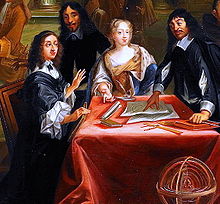
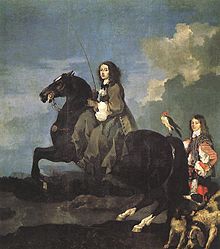
Queen Christina (left) and René Descartes (right)

Queen Christina (left) and René Descartes (right)

DESCARTES. Your Majesty, I have a regrettable announcement to make. I’m not long for this world. Your royal physicians have told me so. These morning lessons of ours are to blame. I’m 54 years old and have never been in robust health. As you know, it was long my custom to stay abed mornings till nearly noon, meditating upon my work. But you insist that I meet you here at 5:00 in the morning. Before that ungodly hour, I must rise, bathe, and dress. And while I am still damp from bathing, I must walk here to your library, out-of-doors in this northern cold that freezes men’s very thoughts. I am burning up with fever. I cannot stop shivering. My lungs are inflamed. Your doctors tell me that my only hope of survival is your royal mercy. Please, please, Your Majesty, allow me a few more hours of sleep. Allow me to tutor you in the afternoon. And may we not light the fireplace? And may we not close some of these windows?

CHRISTINA. I learn best in the cold.

DESCARTES. But Your Majesty—

CHRISTINA. Stop calling me that, Monsieur Descartes. It infuriates me. I am the only woman alive who knows your analytic geometry. You dedicated a book to me. We’ve discussed the mysteries of the universe. We’ve probed each other’s intellects in their full nakedness. That makes us lovers. I am your mistress, not your queen. So call me your beloved darling—no, your precious little squirrel. I command it.

DESCARTES. Your Majesty, that would be—unthinkable.

CHRISTINA. Do it.

DESCARTES. Yes, my … precious little squirrel.

CHRISTINA. Now stop whining about your paltry little ailments. Something terrible has happened. I’ve committed a frightful deed. I don’t know how to live with myself. Sit down.

(DESCARTES does so. CHRISTINA hands him a saucer and a magnifying glass.)

CHRISTINA. Tell me what this is.

DESCARTES (looking in the saucer through the glass). It looks like a tiny pink pinecone.

CHRISTINA. You should know what it is.

DESCARTES. A pineal gland?

CHRISTINA. It came from my dear tomcat, Loki.

220px-Descartes3

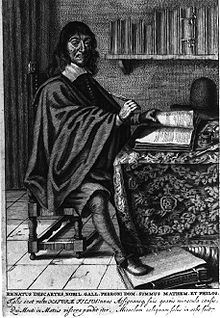
René Descartes

DESCARTES. You killed your cat?

CHRISTINA. He was terribly sick. His eyes were sunken and had lost their luster. He couldn’t lift his backside off the floor, not even to relieve himself. He was suffering terribly, and I knew he would never get better. So I held him close, and said goodbye to him, and broke his neck with a twist of my hand. Then my curiosity got the better of me, and I opened his skull with a paring knife to see what was inside. And there I found this between the lobes of his brain. I thought I was putting him out of his misery. But it turns out that I murdered him.

DESCARTES. You did not murder Loki.

CHRISTINA. Why not?

DESCARTES. One cannot murder a brute beast.

CHRISTINA. Why not?

DESCARTES. Because a brute beast does not have a soul.

CHRISTINA. This brute beast had a pineal gland. The pineal gland is the seat of the soul. You’ve said so yourself.

DESCARTES. Not the seat of the soul precisely. More like a gateway. It connects the sensory realm of matter, space, and extension with the spaceless dimension of spirit, soul, and thought.

CHRISTINA. The dimension of God.

DESCARTES. Indeed.

CHRISTINA. Loki had a pineal gland. Therefore, Loki had a soul. Therefore, Loki had access to that spaceless dimension. Therefore, Loki was connected with God. Therefore, I murdered him.

DESCARTES. Not so, lady, not so. Didn’t you read that book I wrote for you? An animal is nothing more than a wonderful machine of nature. It cannot think or feel. You could have cut open Loki’s skull and poked about his brain while he was fully alive without causing him the slightest distress. I practice this sort of thing myself. Would I ever sanction murder? So put your mind at ease. And please, please, call a servant to start a fire and shut these windows.

CHRISTINA. You haven’t explained why a soulless creature’s brain should contain a gateway of the soul.

DESCARTES. And I shall explain, my precious little squirrel. But not now, not while I am so sick. I beg you, if you love me with a true mistress’s love, if you don’t want me to die—

CHRISTINA. Oh, stop fretting about death.

DESCARTES. Then you do want me to die. That’s exactly it. You are stalking me. You are awaiting the moment for the kill. When I weaken enough, you’ll snap my neck, just like your cat’s. And then you’ll dissect me to compare the insides of our skulls, won’t you?

(Pause)

CHRISTINA. It hadn’t occurred to me.

DESCARTES. Dear God!

Cover Descartes' Meditations on First Philosophy

Cover of Descartes’ Meditations on First Philosophy

CHRISTINA. I’m starting to understand. It’s all coming clear. This whole pineal body-mind duality business, this separation between the material and the mental, you made it all up.

DESCARTES. Why would I do such a thing?

CHRISTINA. Naturally, as a materialist and a mechanist, you’re afraid the churchmen will discover that your learning leads directly to atheism. You are afraid of being burned at the stake like Galileo.

DESCARTES. You mean Giordano Bruno.

CHRISTINA. No, I mean Galileo. Something bad happened to him too, didn’t it?

DESCARTES. He was forced to keep quiet.

CHRISTINA.  Even worse. I warn you, don’t try to deceive me. I did not bring the most brilliant scholar in Christendom to my court so he might hoodwink me along with everybody else. I mean to learn the truth. About everything. At all costs. Now if you value your life, tell me what you know!

DESCARTES. The gland—it is exactly what I’ve said.

CHRISTINA. It makes no sense.

DESCARTES. Then what other purpose might it serve?

CHRISTINA. Perhaps it is vestigial of some long-defunct use. Let us suppose that Loki and I had a common ancestor—

DESCARTES. Cousins? You and your cat?

CHRISTINA. And you. And a dog. And a mouse. And a precious little squirrel. Every creature that has a pineal gland.

DESCARTES. But, oh, noble lady—!

CHRISTINA. I know, I know. “And God said, Let the earth bring forth the living creature after his kind.” And here I am, proposing that God’s eternal kinds are mutable, that they evolve. But let’s be just a wee bit heretical, shall we? Just between ourselves. This is neither Catholic France nor Calvinist Holland, but simple, backward, rustic, Lutheran Sweden, where scarcely anybody has brains enough to be bigoted. Whatever we say won’t leave this room. And if it does, and if the Inquisition catches you—well, I promise to be burned at the very same stake right along with you, and won’t that be fine? Again, let’s suppose that you and I and Loki had a common ancestor. Whatever such a creature was, it had some use for the gland. Perhaps it was a sort of eye, just like the mystics say. That use disappeared, but the gland did not. And now it just sits there wedged in our brains, doing nothing in particular. There is no gateway to the soul.

DESCARTES. Blasphemy.

CHRISTINA. How so?

DESCARTES. You are on the brink of saying—

CHRISTINA. What? That there is no soul? That there is no God? Nay, perhaps simply everything—this entire exquisitely manifold and sundry material world of ours—is nothing but soul, is nothing but God.

DESCARTES. It is atheism either way.

Queen Christina

Queen Christina

CHRISTINA. Nonsense. It is piety multiplied. We must worship the body, because it creates mind. We must worship mind, because it is capable of worship. We must worship all immanence, because it is God. When we go into a church, we must sing hymns of praise to its very stones, for they too are the stuff of divinity, restlessly striving for mind and for life. If I am wrong, you must explain to me why.

DESCARTES. I haven’t the strength.

CHRISTINA. Then you’ve proved my point. Your body and your mind are one. Otherwise your mind would be impervious to the sickness of your body. Your body is about to die; therefore your soul is about to die. Or might your soul instead assume some other material shape?

DESCARTES. I shall lose consciousness.

CHRISTINA. Oh, do! Please! I must observe that! (Pause) Could you teach me how to lose consciousness too? I want to know what it’s like.

END OF PLAY

Tolstoy and the Shaker

AnnasWorldcoversmallThe work Pat and I do together leads us on some fascinating detours. While we were researching the Shakers for our multiple-award-winning novel Anna’s World, we ran across a startling letter from the great Russian novelist Leo Tolstoy himself …

I received the tracts that you sent me, and read them, not only with interest, but with profit; and cannot criticise them, because I agree with everything that is said in them …

Tolstoy was writing to Frederick W. Evans, a Shaker elder based in New Lebanon, New York. The date was February 15, 1891. By then Tolstoy was a thoroughgoing Christian anarchist-pacifist, cantankerous and iconoclastic enough to look back upon his own masterpieces War and Peace and Anna Karenina with utter disgust. And the communistic, celibate Shakers were right up his alley. He and Evans kept on writing back and forth, exchanging ideas about religion, society, and justice.

shakers-dancingFrederick Evans had been a socialist since his youth. In 1830, when he was about 22 years old and every inch a materialist and secularist, he went out scouting New York state for a place to found his own utopian community. He stopped in New Lebanon to visit the Shakers there, expecting to find “the most ignorant and fanatical people in existence.” Instead he was promptly converted, convinced that he had found just the ideal society he had envisioned.

Evans’s life as a Shaker was anything but cloistered. He served the Shakers as an ambassador to what they called simply “the World.” At the height of the Civil War, Evans and another elder visited the White House, petitioning President Lincoln for exemption from the draft. Although deeply opposed to slavery and actively supportive of the Union, the Shakers were steadfast and devoted pacifists for whom fighting was morally unthinkable.

Lincoln was impressed by the elders. After they finished making their case, he asked …

“Well, what am I to do?”

“It is not for me,” Elder Frederick replied, “to advise the President of the United States.”

“You ought to be made to fight,” Lincoln said. “We need regiments of such men as you.”

Even so, Lincoln granted the petition.

10606140_910718692290831_759700197982803500_nIn their correspondence, Evans and Tolstoy hit it off famously. When Evans died, Tolstoy wrote a letter of sympathy to another Shaker elder …

I can not tell you how sorry I am, not for the death of our dear and honored friend Evans, but for you and for all those who loved him and were fortified by his spirit. I am one of them.… I loved him very much.

In Anna’s World, I hope that Pat and I wrote a novel that both Frederick Evans and Leo Tolstoy might enjoy. I expect that our chances might have been better with Evans. Shaker intellectuals weren’t too otherworldly to disdain all fiction, and they much admired Tolstoy’s then quite scandalous story “The Kreutzer Sonata.”

But I suspect it would have been tougher to please Tolstoy, whose literary standards eventually got to be downright quirky. In his old age, he had this to say to poor Anton Chekhov

You know, I hate your plays. Shakespeare was a bad writer, and I consider your plays even worse than his.

Ifs, Ands, or Buts?

but: Archaic conjunction indicating exclusion; obsolete in today’s usage.

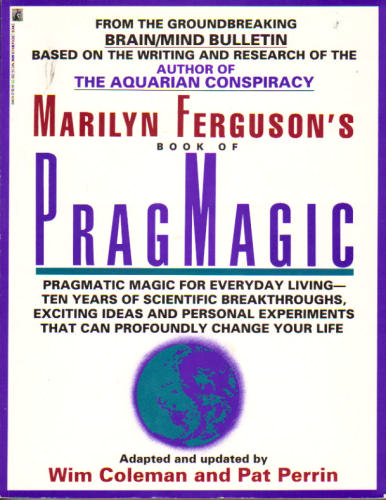
26bdc6da8da0b94015af1110.L… and so the latest edition of Aforista’s dictionary declares the word “but” to be defunct. Can the OED be far behind? I can’t resist mentioning that Pat and I anticipated this lexical milestone in the first book we ever worked on together—PragMagic, a compilation of material from the late Marilyn Ferguson’s newsletter Brain/Mind Bulletin. In it we coined the motto,

Holism means never saying “but.”

Defining holism as “the theory that the universe can be seen in terms of interacting wholes that are more than the mere sum of their individual parts,” we suggested …

In a complex and diverse world, we should try to live increasingly inclusive lives. We must connect in as many ways as possible. Every time we say the word “but,” we implicitly exclude something, make an exception, say that something doesn’t belong.

In my own decades-long writing career, I’ve paid a fair amount of attention how often I use the word “but.” No, I haven’t eliminated it entirely, but I’m pretty sure I use it less and less as time goes on. It’s a habit that Pat and I recommended cultivating in PragMagic …

… living with increasingly fewer “buts”—and a lot more “ifs” and “ands.”

NOT Signed on July 4, 1776 …

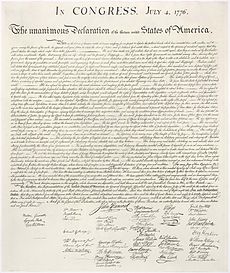
230px-Us_declaration_independenceWay back in 1997, I compiled, edited, and introduced a small collection of source materials about the Declaration of Independence. It was fascinating to explore the Story of that great document. Here is the epilogue I wrote for the book:

What really happened during those first four fateful days of July, 1776? As the previous pages of this book suggest, the truth is somewhat at odds with popular legend. American independence was actually approved by Congress on July 2, not on July 4; the vote was twelve to zero, with New York abstaining. New York voted in favor of independence on July 7, finally making the decision unanimous. The adoption of the Declaration of Independence on July 4 was regarded by the delegates as little more than a legal formality—with important public relations implications, of course.

Perhaps most surprisingly, there is no evidence that a signing of the document took place on July 4. The only signatures put onto the document on that day seem to have been those of Congress’s president, John Hancock, and its secretary, Charles Thomson. The iconic engrossed copy of the Declaration didn’t become available for signing until August 2. Many of its famous signatures were not added until weeks or even months after that. Some of the signers had not been present in Congress on July 4, 1776, to vote on the Declaration’s adoption, while some delegates who had been present on that day never became signers (Garry Wills, Inventing America: Jefferson’s Declaration of Independence, New York: Doubleday, 1978, p. 339).

But the myth of a July 4 signing has proven very powerful—so powerful that Thomas Jefferson and John Adams both mistakenly came to believe that it had actually happened! Through good intentions and faulty memories, the two most important instigators of American independence generated their share of misinformation about the Declaration of Independence.

John Adams was correct, however, when he wrote to his wife, Abigail, on July 3, 1776, “It may be the Will of Heaven that America shall suffer Calamities still more wasting and Distresses yet more dreadfull.” The Revolutionary War would continue its destructive course until the United States defeated the British at Yorktown in 1781 with the help of the French Fleet. Even after peace was declared in 1783, the new nation still faced the question of how to govern itself. The Federal Constitution, which went into effect in 1789, created a strong union but left the problem of slavery unsolved. It would take the tragic and terrible Civil War (1861-1865) to bring an end to slavery, but race relations in America remain deeply troubled to this day. With such a turbulent history, perhaps we should be grateful for the benign mythology surrounding our Declaration of Independence and its ennobling language.

The most magical story told about Thomas Jefferson and John Adams happens to be true. On July 4, 1826, the fiftieth anniversary of their Declaration’s adoption, both men were on their deathbeds. That morning, Jefferson awoke from a coma to ask his bedside companions, “Is it the Fourth?” He died shortly after noon. Adams passed away later the same day after murmuring these haunting last words:

“Thomas Jefferson survives.”

Talking Leaves: Sequoyah and the Conjurors — a short play

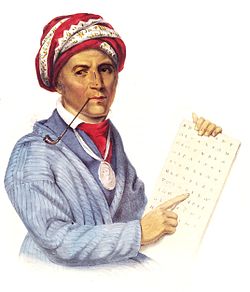
250px-SequoyahCharacters:

Three Cherokee Conjurors
Sequoyah

The scene is a forest clearing near the Cherokee town of Willstown, Alabama, in 1821. Sequoyah stands facing three conjurors, a leather bag hanging from his shoulder.

1ST CONJUROR.  George Guess, do you know why we have summoned you?

SEQUOYAH.  So I may plead for my life. But I don’t know why. You’ve already decided to kill me.

1ST CONJUROR.  It’s said that you’re possessed by an evil spirit.

SEQUOYAH.  A shee-leh.

2ND CONJUROR.  Yes.

SEQUOYAH.  And the only way to destroy a shee-leh is to kill the creature it possesses. Go on and do it, then.

2ND CONJUROR.  But is it true?

3RD CONJUROR.  Are you possessed?

SEQUOYAH.  Wouldn’t I be the last to know?

1ST CONJUROR.  Tell us.

SEQUOYAH.  So I must plead for my life, or you’ll bore me to death. Wait just a moment …

(SEQUOYAH reaches into his bag, takes out a small wooden board, a few pieces of paper, and a pencil. He squats on the ground, puts the board on his knees as a makeshift desk with paper on top of it, then takes the pencil in hand.)

SEQUOYAH.  I’m ready.

3RD CONJUROR.  What are those things?

SEQUOYAH.  This is paper, of course. But here’s something new, even to me. A pencil, white men call it. Like a pen, except it doesn’t use ink. Yesterday I bought a dozen of them from a passing white peddler. A fine tool. Have a look.

(SEQUOYAH holds the pencil toward the CONJURORS, who draw back fearfully.)

SEQUOYAH.  It won’t bite. Just a little wooden rod with a core of hard black stuff—graphite, it’s called. When it’s whittled to a point, the graphite leaves lines—like ink, only dry. While I’m weeping and groveling, I don’t want to keep dipping a quill in an inkwell.

(SEQUOYAH begins to write.)

1ST CONJUROR.  What are you doing?

SEQUOYAH.  Writing down what we say.

2ND CONJUROR.  So you use your magic right in front of us!

3RD CONJUROR.  The magic of talking leaves!

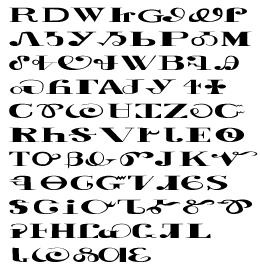
SEQUOYAH.  It’s not magic. I learned how to do it on my own. I listened to the sounds of our speech, then made up marks for them.

1ST CONJUROR.  White men make marks like yours. They’re evil magic.

SEQUOYAH (writing furiously).  Could you talk more slowly?

1ST CONJUROR.  We’ll talk as fast as we like.

SEQUOYAH.  Well, then. I won’t try to write everything.

(SEQUOYAH writes more slowly, and only intermittently.)

SEQUOYAH.  Talking leaves give the white man power. He can put his thoughts on paper, then send those thoughts to a friend far away—over hills, plains, and rivers. Then that friend can reply with leaves of his own. Talking leaves destroy distance—that great, invisible shee-leh that thwarts us all. Without talking leaves, the white man could never subdue us. They are his most powerful tool.

3RD CONJUROR.  His tool, not ours.

1ST CONJUROR.  His way, not ours.

SEQUOYAH.  How odd. I sit here accused of practicing his magic while neglecting my cattle and hogs, my plow and manure. But farming is the white man’s way. He forced it upon us to stop us from hunting and roaming. If I tear up my magic leaves, will you burn down your barns, kill your livestock, salt your fields? And what about horses, which I’m told the white man brought here ages ago?

1ST CONJUROR.  Horses have always been ours. The Great Spirit gave them to us.

SEQUOYAH.  Well, so you say. What about rifles? Each of them is stamped with the name of the white man who made it. Give yours to me, and I’ll melt them down in my forge, make lumps of iron out of them, put them back in the hills where they belong. Oh, but I forgot—blacksmithing is also the white man’s way. I must destroy my forge. To become pure Cherokee again, we must reject all the white man’s ways—even those we need to defend ourselves against him.

(Pause)

3RD CONJUROR.  Tell us, George Guess—do you know why talking leaves belong to the white man and not to us?

SEQUOYAH.  I’ve never heard the story.

1ST CONJUROR.  In the beginning, the Great Spirit created us real people, and then he created the white men. Because we came first, he gave us a great gift—books with talking leaves that would grant our every wish. To the white men, he gave a lesser gift—the bow and arrow. But we Indians never bothered to use our books. They lay gathering dust. At last, the white men crept along and snatched them away, leaving bows and arrows in their place. Since then, we have lived short, hard lives pursuing and killing creatures of the wild, while the talking leaves have blessed the white men, giving them command of all creation. The Great Spirit has never forgiven our neglect and thanklessness. Few are the blessings he has granted us.

(SEQUOYAH laughs.)

1ST CONJUROR.  You find it funny?

SEQUOYAH.  Yes, because I know the real truth. The moon laughs—laughs loudly, day and night.

2ND CONJUROR.  I’ve never heard the moon laugh.

SEQUOYAH.  Neither have I. But the white man does hear it—and the Great Spirit blesses him for that.

3RD CONJUROR.  This story is a lie.

SEQUOYAH.  But it was told to me by my mother—Wurteh, sister of Old Tassel.

2ND CONJUROR.  The sister of Old Tassel could never lie.

SEQUOYAH.  Ah, but mightn’t I lie—say that my mother told me a story when she didn’t? And how can I know that your story isn’t a lie? How can we Cherokee ever know what’s truth or lie, fact or imagination? The white man knows. His talking leaves tell him.

(SEQUOYAH shows them a piece of paper.)

SEQUOYAH.  Imagine that my mother had written the story of the laughing moon on this paper, many years ago. Imagine that she swore to its truth by making a mark right here—a mark that was hers alone. Would you believe it then?

1ST CONJUROR.  Yes.

SEQUOYAH.  Then you grasp the greatest gift of the talking leaves—the gift of memory. The white man knows who he is, remembers all he has done, possesses a power he calls history. We Cherokee scarcely remember our grandfathers. And though our heads are full of old stories, how can we be sure that we recall those stories aright? Have we changed them in telling and retelling them again and again?

3RD CONJUROR.  We trust the Great Spirit to preserve the truth of our stories.

SEQUOYAH.  Yes, and it’s your job to keep telling them. But look at yourselves. You’re old and near death. How many young men stand trained and ready to carry on your work? None. The missionaries have converted them all to the white man’s religion. This way of writing I’ve made—it’s all that stands between you and forgetfulness. Your spells, your charms, your medicines, your wonder-working dances and songs—all will be lost without magic leaves.

(Silence)

SEQUOYAH.  You don’t care, then? I see you’ve accepted the white man’s religion after all.

1ST CONJUROR.  We’ll never do that.

SEQUOYAH.  Oh, but you have. You love your enemies, bless those who curse you. And if a man steals your coat, you give him your pants and shoes and hat as well. And if he hits you on one side of the head, you turn so he can hit you on the other side. And most of all, you always do for others what you wish they would do for you. And why should I blame you? Those are good ways, blessed ways. After all, the missionaries teach that the meek shall inherit the earth.

2ND CONJUROR.  The meek inherit nothing.

3RD CONJUROR.  The white man overruns the earth by force.

SEQUOYAH.  That’s the clever wickedness of his religion. Its lessons are meant to be disobeyed. When their chief spirit came among them, the first thing the white men did was kill him. They fastened him to a tree with iron barbs made in their forges, riddled him with spears, tormented him with thorns, until at last he died of pain. When he returned from the dead, he blessed his murderers for their cruelty—and that’s been the secret of the white man’s religion ever since. When they disobey their spirit, he blesses them; when they obey him, he curses them. Always do what the spirit says not to do—that’s the white man’s creed. Disobedience is the only path to Christian salvation. But every day, the missionaries teach our children to obey this religion of disobedience, making them fit for slaughter. Our only weapon against this evil is the talking leaves.

(Silence)Sequoyah_Arranged_Syllabary
SEQUOYAH.  And I’ll show you how to use them. Do you wish it?

(Silence)

SEQUOYAH.  Well. Stop calling me by the name I got from my white father. Call me by the one my mother gave me. I’ll write it for you sound by sound. Look.

(The CONJURORS huddle around SEQUOYAH, watching as he writes.)

SEQUOYAH.  Se … quo … yah.

END OF PLAY