“The Cruelty Is the Point”

It’s been almost five years since I posted some thoughts about Mark Twain’s A Connecticut Yankee in King Arthur’s Court and how it relates to our times. Revisiting those thoughts today, they seem even more sadly apt than they were back then.

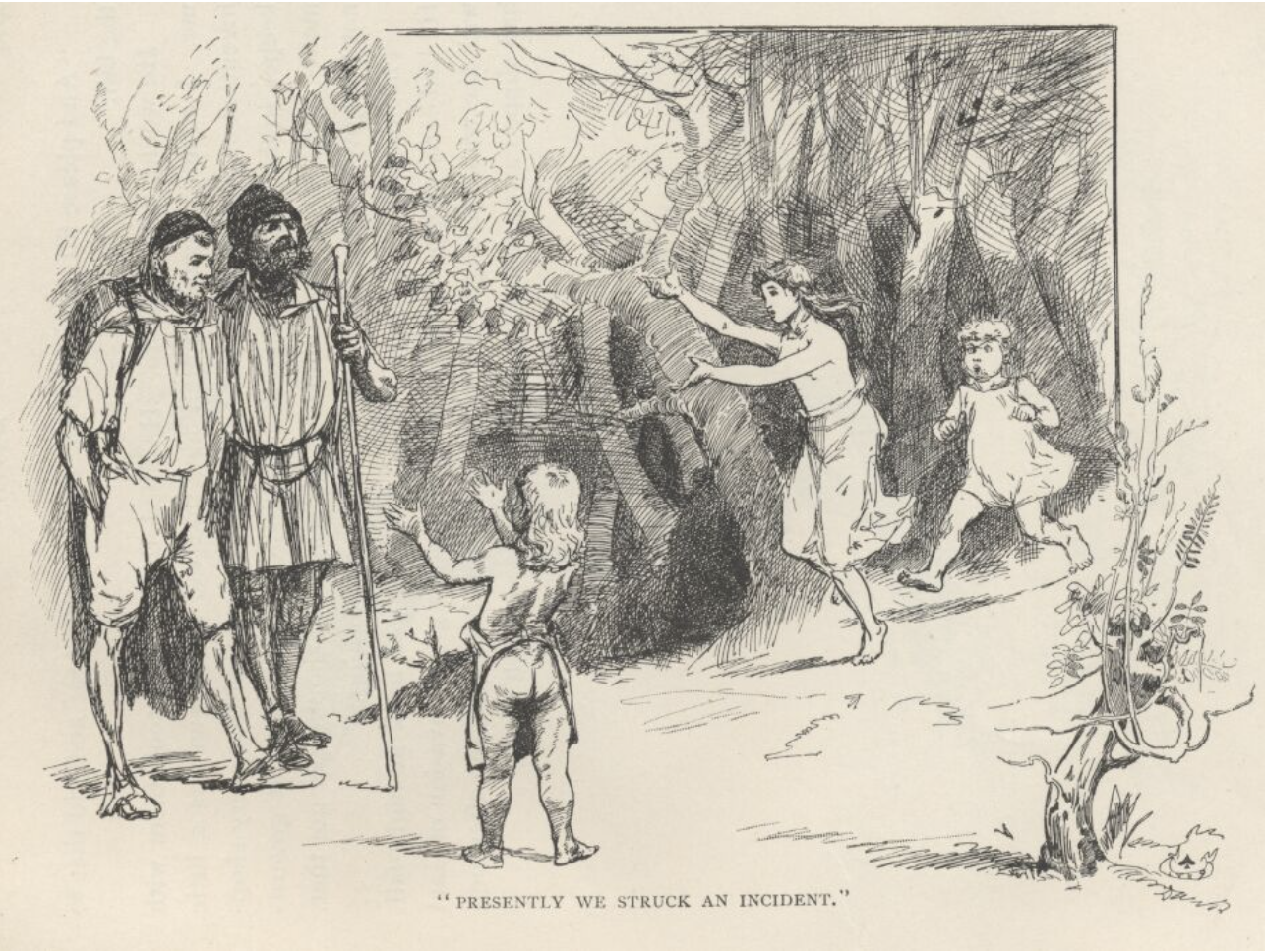
Illustration by Daniel Carter Beard for the 1889 edition of A Connecticut Yankee in King Arthur’s Court

A Connecticut Yankee is mysterious and disturbing book, so unlike its reputation that one can only assume that few people really bother to read it. It starts off as a light-hearted satire of medieval times and climaxes with an apocalypse of sorts—the mass slaughter of Europe’s knight errantry by electrocution, dynamite, and a Gatling gun.

But perhaps the book’s most unsettling episode involves children. When the protagonist, Hank Morgan, takes King Arthur on an incognito tour of the brutal realities of his kingdom, they witness a spree of mob violence in which peasants turn against peasants, butchering and hanging one another out of blind fear of their rulers. The next day, Hank and the king come across this scene:

A small mob of half-naked boys and girls came tearing out of the woods, scared and shrieking. The eldest among them were not more than twelve or fourteen years old. They implored help, but they were so beside themselves that we couldn’t make out what the matter was. However, we plunged into the wood, they scurrying in the lead, and the trouble was quickly revealed: they had hanged a little fellow with a bark rope, and he was kicking and struggling, in the process of choking to death. We rescued him, and fetched him around. It was some more human nature; the admiring little folk imitating their elders; they were playing mob, and had achieved a success which promised to be a good deal more serious than they had bargained for.

Illustration by Daniel Carter Beard for the 1889 edition of A Connecticut Yankee in King Arthur’s Court

Twain’s account of children hanging one another to imitate their elders is truly a fable for these days of Trumpism. The question is often asked: Do you want your children to behave like Donald Trump, with his blatant narcissism, bigotry, misogyny, name-calling, cruelty, bullying, crooked dealings, and interminable lies? While few Americans would admit it aloud, I suspect that an alarming number of them want exactly that. As Elon Musk himself said to Joe Rogan, “The fundamental weakness of western civilization is empathy.”

Specifically, empathy is held suspect in male children. It’s an idea that’s deeply ingrained in our culture—that empathy, fair play, and kindness are for sissies and “girly men.” Boys must instead be taught the opposites of all those traits in order to grow up to be “real men”—men with power, fame, and wealth like Donald Trump. Life is a zero-sum game, and “nice guys finish last,” and to be a man, one must never show weakness, shame, or scruples, nor ever concede defeat.

We often say of Trumpism that “the cruelty is the point,” especially when it comes to the treatment of immigrants and their families. But Twain wanted us to believe that cruelty is not innate but learned, and that childhood is the aptest time to teach it. In “The United States of Lyncherdom,” a polemic Twain wrote to protest the rise of murderous violence against African Americans, he tried to explain the viciousness of mobs as motivated by moral cowardice, not pleasure:

Why does a crowd … by ostentatious outward signs pretend to enjoy a lynching? Why does it lift no hand or voice in protest? Only because it would be unpopular to do it, I think; each man is afraid of his neighbor’s disapproval — a thing which, to the general run of the race, is more dreaded than wounds and death.

As bitter as Twain became toward “the damned human race,” I fear that he remained naïve about human nature. Cruelty may well be indeed learned and imitated, not innate; but once it takes root, it becomes an illness, an addiction. Some addicts don’t merely pretend to enjoy their drug of choice; they convince themselves of it.

As Huckleberry Finn put it upon witnessing an act of mob violence, “Human beings can be awful cruel to one another.”

—Wim

The King and the Duke are tarred and feathered; illustration by E.W. Kemble from the 1885 edition of Adventures of Huckleberry Finn

In the Name of Liberty …

Just as an individual, subjected to certain inner pressures beyond his endurance, will suddenly go mad and destroy himself or those around him, so too, apparently, can a segment of society take leave of its senses and deliver itself to the forces of destruction.

—Stanley Loomis, Paris in the Terror

These words written about the French Reign of Terror are scarily apt for America today. Perhaps that’s one reason why my yet-unproduced play The Mad Scene is getting quite a few readers these days. You can download the entire play here.

The Death of Marat, by Jacques-Louis David

Described as “an Our Town about the French Reign of Terror,” The Mad Scene tells a story of collective and individual insanity. As the Terror rages around her, the wax sculptor Marie Grosholtz (the future Madame Tussaud) uses the guillotined heads to shape her creations. Small wonder that she goes insane and holds conversations with wax figures of Marie Antoinette, Charlotte Corday, Maximilien Robespierre, and Jean-Paul Marat.

As ICE agents round up and deport alleged gang members to a Salvadoran mega-prison based on no sounder evidence than tattoos, and as foreign students with legal visas are detained and deported for exercising their freedom of speech, and as an American President wreaks lawless revenge upon his enemies, all with the sanction of far too many Americans, I’m reminded of the massacres of September 2-7, 1792, when Parisian mobs emptied the prisons of political prisoners and slaughtered them in staggering numbers.

In my play, the revolutionary firebrand Jean-Paul Marat harangues the mob:

Fools! The enemy is already here within our gates. Our prisons are full to bursting with aristocrats, priests, traitors, and conspirators, all of them lusting for revenge against every last Parisian who ever dreamed of liberty. And while you go out playing at soldiers fighting foreign enemies, they shall break out of their cells and slaughter your wives, mothers, sisters, and children.

Empty the prisons, kill every last enemy of freedom!

Kill them all before they destroy everything and everyone you love!

Vive la Nation!

Vive la République!

Le jour de gloire est arrivé!

The September Massacres took the lives of some 1200 people, including priests, monks, and nuns—a small number compared to the victims of the Reign of Terror yet to come.

As Madame Roland said before she was beheaded on November 8, 1793 …

Oh, Liberty! how many crimes are committed in thy name!

Mass killing of more than 200 prisoners in the Châtelet on September 3, 1792

—Wim

“The Mad Scene” — prologue to Wim’s award-winning play

Here is the prologue to my full-length play The Mad Scene, which has been aptly described as “an Our Town about the French Reign of Terror.” It was developed during 2020-21 as part of the Theatre at St. John’s Cyber Salon, hosted by Mark Erson. The parts were read by Everett Quinton, Jenne Vath, Sally Plass, Maude Burke, and Shane Baker; Daniel Neiden directed. The Mad Scene has yet to be produced.

The Mad Scene was awarded First Place in the Script category of the 91st Annual Writer’s Digest Writing Competition. It was chosen for the Second Round in the Stage Play category of the 2024 Austin Film Festival’s Script Competition.

The entire text of The Mad Scene is available by clicking right here.

*

PROLOGUE

Characters:

Marie Grosholtz/Madame Tussaud
Marie Antoinette

The scene is the Madeleine Cemetery, Paris, the night of October 16, 1793.

MARIE ANTOINETTE’s head lies in the lap of MARIE GROSHOLTZ, who will later become known as Madame Tussaud. MARIE works by the light of a lantern. At first, ANTOINETTE’s eyes are closed; then they snap open.

ANTOINETTE. There is no sky.

MARIE. Madame, can you hear me?

ANTOINETTE. I never noticed it before.

MARIE. I must take your face.

ANTOINETTE. Carolina, look for yourself. You’ll see it’s true.

MARIE. I’m not Carolina.

ANTOINETTE. There is no sky. There are only stars. Oh, and a slender curved scimitar of a moon, hanging by … an invisible thread, I suppose. But tied to what? There’s nothing to tie it to, nothing to hang it from. There is no sky. (wincing) Don’t. Carolina, why are you touching my face like that?

MARIE. I’m not your sister. I’ve got to make a cast of your face.

ANTOINETTE. What are you smearing on my skin?

MARIE. Oil, so the plaster won’t stick.

ANTOINETTE. What a silly thing to do on such a night, with a moon and so many stars and no sky at all to gaze at. Look.

MARIE. I’m looking.

MA-Lebrun

Marie Antoinette, by Élisabeth Vigée Le Brun.

ANTOINETTE. No, you’re not. You’re looking down at me. You’re in the way of my view. But where are we? Oh, we fell asleep in the gardens again, didn’t we? I was counting clouds and you were giving them names and it got dark without us knowing it. Our dresses must be soaked through with dew. Odd, I feel so … dry. We’ve got to get back to the palace. The countess must be angry. Or beside herself with worry. Poor old thing, we’re so much trouble to her.

MARIE. We’re not in your garden in Vienna.

ANTOINETTE. Of course we are.

MARIE. No. This is the Madeleine Cemetery. In Paris

ANTOINETTE. What are we doing in Paris? Don’t touch my eyes.

MARIE. I’m only closing them.

ANTOINETTE. Why?

MARIE. Because they’re not glass. I’m covering them with plaster.

ANTOINETTE. I don’t understand.

MARIE. It’s best not to talk.

ANTOINETTE. Why not?

MARIE. The dead are usually quiet. Or at least they’re supposed to be.

Exécution_de_Marie-Antoinette,_Musée_de_la_Révolution_française_-_Vizille

Execution of Marie Antoinette, Museum of the French Revolution. Licensed under the Creative Commons Attribution-Share Alike 4.0 International license: creativecommons.org/licenses/by-sa/4.0/deed.en

ANTOINETTE. I’m not dead.

MARIE. Madame, you have been beheaded. You are certainly dead. Tomorrow you will be buried. It really would be best to keep quiet. You’ll upset yourself.

ANTOINETTE. You’re not Carolina.

MARIE. So I’ve been telling you.

ANTOINETTE. I’ve not been beheaded.

MARIE. You have, and it was hard to find you among so many dead, all thrown about every which way, so it’s hard to tell whose head belongs to whose body. Don’t you smell the stench?

ANTOINETTE. No.

MARIE. Death has its blessings then. I never guessed how blood and flesh could stink. It’s always such a chore, this scrounging through stench and open graves, looking for just a certain head. Your husband was even harder to find than you, and to make things worse, he was already dissolving in quicklime.

ANTOINETTE. My husband?

MARIE. But I found you. I recognized the white morning dress you wore on the scaffold, even though it was stained and caked with blood and dirt. Then your head was easy to spot, plopped right between your knees. But your face looks strange now—so thin and drawn, with a scalp of short white hair. When did your hair turn white? Oh, I hear it was after you were caught trying to escape—you and the king and your children. I can fix all this when I make your new face.

ANTOINETTE. Who are you?

MARIE. I hoped you’d remember me, madame. My name is Marie Grosholtz. I lived at Versailles nine years. I tutored Madame Elizabeth in molding wax, and I lived in her apartments and kept her company. You were very kind to me in those days, madame.

ANTOINETTE. Versailles? Madame Elizabeth?

MARIE. The king’s sister. You don’t remember. You’re confused. But don’t worry. The plaster will set, and we’ll be finished soon, and it won’t matter whether you remember or not. I needn’t tell you to keep still. You’re doing that anyway.

ANTOINETTE. There is no sky.

MARIE. I’m sure you are correct, madame.

ANTOINETTE. Oh, yes. Versailles. They tell me I’m going there. They tell me I am to become the Dauphine of France.

MARIE. If you say so, madame.

ANTOINETTE. I am to marry the Dauphin, they tell me—Louis-Auguste, some cousin I’ve never met. They say he is a clumsy boy, rather stupid, and he’s sure to grow fat, and he can’t dance at all. But then, I’m just a girl myself, and people say I am silly and I laugh more than I should and I like to dance too much. No, don’t deny it, I know that’s what they say. But he’s a boy, just a boy. I wish I could marry a man, someone wiser, someone I could trust to know …
… how to …
But it’s not up to me, is it? Nothing is up to me. And not only must I stop being an archduchess, they tell me I must stop being Austrian, and I must say goodbye to everyone I’ve ever known—even to you, Carolina, and also to Mutti—and I must forget how to speak German and speak French perfectly for the rest of my life. And when I go to France, before I meet the Dauphin in the Forest of Compiègne, I must be stripped of every scrap of my Austrian dress and be clothed anew in the manner of a French princess. Of course there will be people watching me change. It’s always been like that. I’ve never been naked alone. But in France there will be more people than ever, watching my every waking moment, and while I’m sleeping as well. I will put on my rouge in front of the whole world. It will never stop.

MARIE. There. The plaster is set. I’m almost finished.

ANTOINETTE. That pinches.

MARIE. Yes, but only for a moment, while I remove the cast.

(MARIE pulls the cast away.)

MARIE. I must leave you now.

ANTOINETTE. Where are you going?

MARIE. To where I work.

ANTOINETTE. You can’t leave me.

MARIE. I must. I’m sorry.

ANTOINETTE. I am your queen.

MARIE. France has no queen.

ANTOINETTE. Obey me.

MARIE. I must obey the National Assembly. I wish it weren’t so.

ANTOINETTE. Take me with you.

MARIE. I can’t take your head, madame. I’ll lose my own if I try. Adieu.

Madame_Tussaud,_age_42

Marie Tussaud, by John Theodore Tussaud.

ANTOINETTE. Wait! I remember! Your name is Marie! You make likenesses from wax! Elizabeth adores you! She came running to me a little while ago to show me a Virgin you taught her how to make. “Look, sister!” she said. “Look at my little wax Mother of God! I made her look just like you without meaning to, I couldn’t help it! Was that blasphemous of me, sister? Must I confess it to the abbé?” “No, sister,” I said. “No blasphemy at all …”

MARIE. Adieu, madame.

ANTOINETTE. But what will happen to me after you go?

MARIE. I don’t know.

ANTOINETTE. Oh, but you do. I’ll vanish. I’ll die. Please, I beg you. It is only by the grace and bounty of your madness that I still live. Don’t let me die.

MARIE. You’ll live again in wax.

ANTOINETTE. But will I remember … ?

MARIE. I don’t know what you’ll remember.

ANTOINETTE. Will I still be myself?

MARIE. I don’t know.

ANTOINETTE. Am I myself even now?

MARIE. I said I don’t know.

ANTOINETTE. Please stay!

MARIE. Dawn is nearing.

ANTOINETTE. We’ll watch it together!

MARIE. I must go.

ANTOINETTE. We’ll skip barefoot in the dew, watch morning burst into blossoms of light, bathe ourselves in mad mists of swirling color! We’ll worship the sun and laugh and dance like Incan priestesses!

MARIE. Adieu.

(MARIE exits, carrying her lantern.)

ANTOINETTE (dying). There … is … no … sky …

BLACKOUT.

1557px-nicolas-antoine_taunay_-_le_triomphe_de_la_guillotine

Le triomphe de la guillotine, Nicolas-Antoine Taunay

At the Crossroads…

The great Israeli poet Yehuda Amichai once proposed that all poetry is political:

This is because real poems deal with a human response to reality, and politics is part of reality, history in the making. Even if a poet writes about sitting in a glass house drinking tea, it reflects politics.

We would like to add that every poem—indeed, every attempt to bring a spark of beauty into the world—is an act of political resistance against the forces of hatred and cruelty. Here is a humble offering for these difficult days …

The Hidden Beatitudes

from the Sermon at the Crossroads

Blessed are those who know there to be no blessings, 
for they shall hear the music of the abyss.

Sure of foot are those who seek no benediction,
for unto them the path is lighted.

Happy are the accursed among the phantasms of virtue,
for unto them shall be granted
the soothing sweet aloe of shame and ignominy.

Prodigious are those who skip stones,
for the crashing of the surf begins
with a pebble’s ripple upon a smooth mirroring sea.

Able are those who master the art and mystery of blindness,
for they alone shall see their darkness.

Clever are those who wend nimbly among the snares of opinion,
for they shall bridge the chasm between ignorance and knowledge.

Prosperous are those who give away more than they have,
for their shoulders shall carry no burden.

Safe and sequestered are those who fear not the icy ruthlessness of love,
for they shall be warmed and caressed by moonbeams.

Giddy are those who transgress and offend,
for they shall join in the whirling dance of happy adversaries.

Vital are those who preserve the sanctity of spaces,
for every snowflake has its perfect double,
and the last conflagration will come when like collides with like.

Cheerful are those who thrive among the ruins,
for they shall be undeceived by hope.

Righteous are those who break the hourglass,
for its grains are as shards of spirit
petitioning release from the bondage of temporality.

Clear-headed are those who wander in the realm of doubt,
for they shall not succumb to the credulity of the congregation.

Refined and discerning are the foolish and unwary,
for they shall savor with equal delight the sweetness of the wine
and the venom of the spider in the dregs of the wine.

Buoyant are those who laugh,
for they shall not perish in the floodwaters of solemnity.

Profuse are those who are porous in selfhood,
for no vessel shall contain them,
and the hearts of multitudes shall be their dominion.

Splendid are those who spire upon the precipice,
for they shall gaze downward upon a sky swarming with stars.

—Wim


A Playwright’s Predicament

“Who are you writing for?”

A respected friend of mine asked me that after reading my new play, Wiser than the Night. As it happened, Pat and I were discussing that very question over breakfast that very morning. It’s a good question, I suppose. Maybe even the only question. I’ve always believed that writers must always write for themselves, then hope for the grace of kindred spirits for readers, however few those readers might be—or in the case of a play, however small the audience.

As I worked on this play, I found myself thinking about what Simone de Beauvoir wrote about Sartre’s The Flies (a play I’m pretty obsessed with):

“The real function of the theater, Sartre thought at the time, is to appeal to those who share a common predicament with the playwright.”

Sartre’s “predicament” was that of a patriotic resistance fighter in Vichy France. My predicament is that of a 70-year-old man who has lived through enough of this split second we presume to call “human history” to be puzzled by its fruits, staring down the barrel of an awful future for humanity.

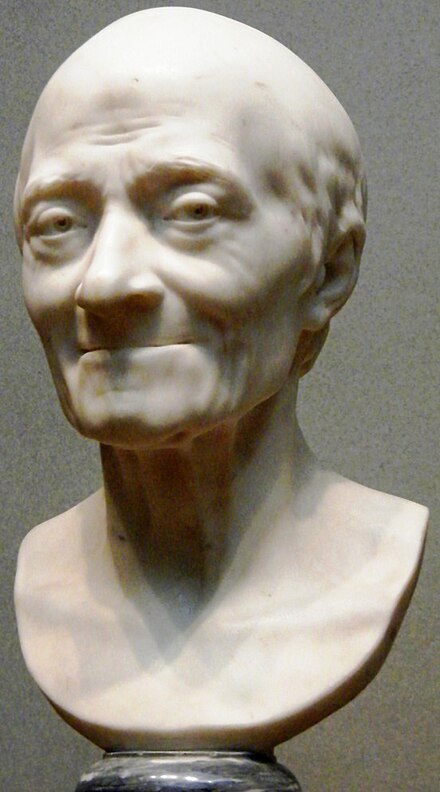
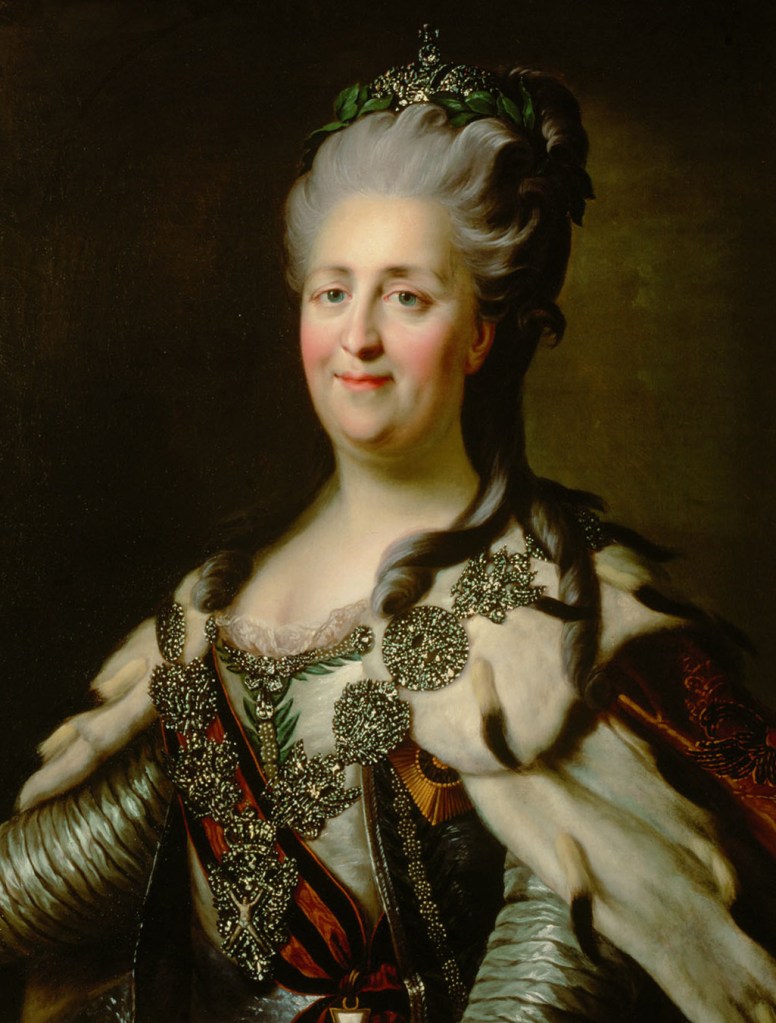
The action of Wiser than the Night ranges from the 18th-century Enlightenment to the election of President Ronald Reagan. Its characters include an elderly Russian dancer who survived the Russian Revolution, and also Catherine the Great and the French philosophe Voltaire.

“Why Voltaire?” I’ve been asked.

I was raised to revere the influence of Enlightenment thinkers on the world of ideas, especially our civic values and our systems of governance—and Voltaire is the Enlightenment personified. Like a character in my play, I find myself wanting to ask Voltaire, “What went wrong?” How did an epoch that began with the United States Constitution and the French Déclaration des droits de l’Homme et du citoyen bring us to the ascendency of Viktor Orbán, Vladimir Putin, and Donald Trump?

I don’t have an answer to that question, but in my own mind, it’s what Wiser than the Night is all about. And it’s a question that must be asked.

If only I can find an audience, however small, that shares my “predicament” …

—Wim

Download a PDF of the play Wiser than the Night HERE.

Motanka dolls from Ukraine
https://olenasunny.blogspot.com/p/blog-page.html