Happy New B’ak’tun!

It’s New B’ak’tun Day! And no, it doesn’t appear that the world is coming to an end, nor have their been any verifiable reports of extraterrestrials showing up. For further details about such rather widespread misapprehensions, check out our post of October 18. Things seem to be shaping up much as Lydia Rosenstrom anticipated in our novel Mayan Interface:

On December 21, 2012, ancient Mayan sites will be overrun by earnest pilgrims, all of them expecting something extraordinary to happen on that collusion of the wheels of the Mayan calendar. All over the world, people are waiting for a force outside themselves to make things right somehow—either by bringing our world to an end or by transforming the whole of humankind. Well, some folks might experience something. Others might miss their best chance while they’re waiting. Some wouldn’t notice transformation if it up and bites them, because it doesn’t fit the story they’re fixed on. Some just expect transformation to be a one-time thing, so they’ll be stuck wherever they arrive that day.

Let’s not get stuck, shall we? Instead, let’s do something productive, even proactive. As we celebrate the arrival of 13.0.0.0.0, let’s reflect on the last cycle of 144,000 days. I think we can agree that the 13th B’ak’tun was a pretty rough patch. Today let’s think up resolutions to make the next 394 years a whole lot better for everybody.

Dream big. Don’t be shy. You’ve got 144,000 days to play with here. And don’t cop out with lame excuses, such as, “I don’t expect to be around that long.” How do you know? Back in the days following what was then called the “Great War” of 1914-18 (before anyone knew that a still greater war was to follow), the brothers Conrad and Franklyn Barnabas predicted that humankind couldn’t survive without the maturity acquired during vastly increased lifespans. So they decided to do something about it. “Our program,” explained brother Franklyn, “is only that the term of human life shall be extended to three hundred years.”

Ever since the Brothers Barnabas put their program into effect, there have been rumors of long-lived humans walking amongst us. How can you be absolutely sure that you’re not one of them? So forget about making resolutions for 2013. It’s time to start thinking about what you’ll do with the next three or four centuries.

Pat and I are eager to hear your resolutions for the New B’ak’tun.  I’ll start with my own modest entry. As the prophet once suggested, I intend to do my part to beat our assault weapons into wind turbines and our handguns into solar panels. That only seems reasonable, given “world enough, and time …”

Of Back-of-the-Book Indexes and Other Cultural Catastrophes

“Writing originated purely for accounting purposes;
all subsequent uses have contributed to writing’s decay.”
Thus Spake Aforista

The postfuturist sage Aforista recently caused quite an uproar with this remark. Yes, I know, it’s a frightful thing to say, but Aforista will speak her mind. And she’s not the first to express such a sentiment. Indeed, she belongs to a long and colorful lineage of cultural naysayers and profits of doom, one of whom recently referred to Wikipedia as the “end of scholarship.”

I can’t remember who said it, and I can’t turn it up on Google or even on Wikipedia itself, which I guess means it might as well never have been said. But I’m sure I read it somewhere. And I’m not surprised at the sentiment. It’s always the “end of” something vital to humanity, and we are always teetering on the edge of a new Dark Ages. (Never mind that there was never really an old Dark Ages.)

We hear about the end of literature and the end of classical music and the end of all manner of things. The modest and self-effacing Harold Bloom even called slam poetry “the death of art.” Of course, Bloom has said that just about everything fundamental to human culture, including Rock and Roll, is also dead. (I, too, am not altogether sure that civilization can survive the recent passing of Levon Helm.)

None of this doomsaying is new to our postmodern, digital age. Everything good has been ending for a long time. It’s worth nothing that reading ended way back in the seventeenth century. To be specific, nobody has actually read books for more than 300 years. Reading was killed off when indexes started appearing in the backs of books.

In The Tale of the Tub (ca. 1694-99), Jonathan Swift attacks the pernicious influence of indexes by satirically assuming the persona of a scholar who approves of them:

[W]e of this age have discovered a shorter and more prudent method to become scholars and wits, without the fatigue of reading or of thinking.… [T]he choicer, the profounder, and politer method, [is] to get a thorough insight into the index by which the whole book is governed and turned, like fishes by the tail. For to enter the palace of learning at the great gate requires an expense of time and forms, therefore men of much haste and little ceremony are content to get in by the back-door.

And of course, Swift can’t resist an off-color analogy:

Thus physicians discover the state of the whole body, by consulting only what comes from behind.

So the tradition of the death of, well, tradition is a very old tradition indeed—a lot older than Swift, even.

In a similar spirit, Plato would have regarded Aforista’s observation as much too generous toward writing. In Plato’s Phaedrus, Socrates relates how the god Theuth invented writing, and how he was upbraided by King Thamus for doing so:

[T]his discovery of yours will create forgetfulness in the learners’ souls, because they will not use their memories; they will trust to the external written characters and not remember of themselves. The specific which you have discovered is an aid not to memory, but to reminiscence, and you give your disciples not truth, but only the semblance of truth; they will be hearers of many things and will have learned nothing; they will appear to be omniscient and will generally know nothing; they will be tiresome company, having the show of wisdom without the reality.

So writing itself meant the end of truth, thought, memory, and—I forget the rest of it. And—oh, the irony!—here I sit at my computer, utilizing the most pernicious technology ever devised, putting down words that are useful for nothing except to turn you, dear reader, into “tiresome company.” Besides, I’ve just used up my allotted number of keystrokes for today, so I’ll get back to all this later.
Of Gadgets and People

My car is smarter than I am. Worse still, it has a wicked sense of humor. It knows that I’ve never really learned all of its buttons, commands, signals, gauges, options, and manifold gadgets stacked inside one another like Chinese boxes. So it plays tricks on me constantly. It’s favorite prank is to be utterly unforgiving of my clumsiness, let alone my ignorance. The slightest slip of my finger on the key holder sets off the car alarm. And I still don’t know how to turn it off.

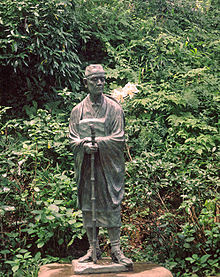
My car continues an ancient tradition of trickster servants who stubbornly insist on carrying out every command literally. Consider the legendary fabulist Aesop. According to tradition, Aesop was a slave to the scholar Xanthus, who admonished him against “doing anything more or less than you are told.” This led to trouble. For example, when given the order, “Pick up the oil flask and the towels, and let’s go to the bath,” Aesop studiedly left behind the oil for the flask, because it was not explicitly asked for.

The long line of trickster servant stories extends beyond Aesop to include Rabbi Loew’s Golem, the Jinn of The One Thousand and One Nights, the “Sorcerer’s Apprentice” of both Goethe and Disney, and W. W. Jacobs’s “The Monkey’s Paw.”  I might well add Pat’s and my novel Mayan Interface, with its portrayal of a trickster computer named Conti, whose all-too-precise obedience to a human command stirs up considerable trouble. In his 1964 classic God & Golem, Inc., the pioneering cyberneticist Norbert Wiener relates such stories to the escalating “gadget worship” of his own time:

The theme of all these tales is the danger of magic. This seems to lie in the fact that the operation of magic is singularly literal-minded, and that if it grants you anything at all it grants what you ask for, not what you should have asked for or what you intend.… The magic of automation … may be expected to be similarly literal-minded.

Writing as he did at the height of the Cold War, Wiener was especially mistrustful of the trickster servants whose mechanical “wisdom” we counted on to save the world from a nuclear holocaust. Perhaps we’ve lucked out of that threat—or perhaps we haven’t. In any case, the uneasy relationship between human and machine becomes more of a problem every day. Wiener’s aptly titled book The Human Use of Human Beings describes how machines may prove to be either the boon or bane of the human species.

As Isaac Bashevis Singer put it, “We are living in an epoch of golem-making right now. The gap between science and magic, science and art is becoming narrower.” Does this narrowing give carbon-based, wetware creatures like ourselves less thinking to do? “No,” says Wiener,

the future offers very little hope for those who expect that our new mechanical slaves will offer us a world in which we may rest from thinking. Help us they may, but at the cost of supreme demands upon our honest and our intelligence. The world of the future will be an ever more demanding struggle against the limitations of our intelligence, not a comfortable hammock in which we can lie down to be waited upon by our robot slaves.

Whenever I find myself losing my battle of wits with my car, I can’t help repeating the words of Aesop’s owner, Xanthus: “Well, I didn’t realize I had bought myself a master.”